Dominated by the flat top of Table Mountain - with its cable car, hiking trails and abseiling - Cape Town is one of the most beautiful cities in the world and one of the most iconic sights in South Africa. The days pass quickly between the beaches and wineries of Constantia, strolls along the V&A Waterfront and ferry rides to Robben Island and, above all, among the friendly Cape people. In addition to its great natural charm, the city benefits from urban renewal works and now gourmet restaurants, food markets and designer shopping centres are opening in former industrial districts such as Woodstock and the Waterfront.
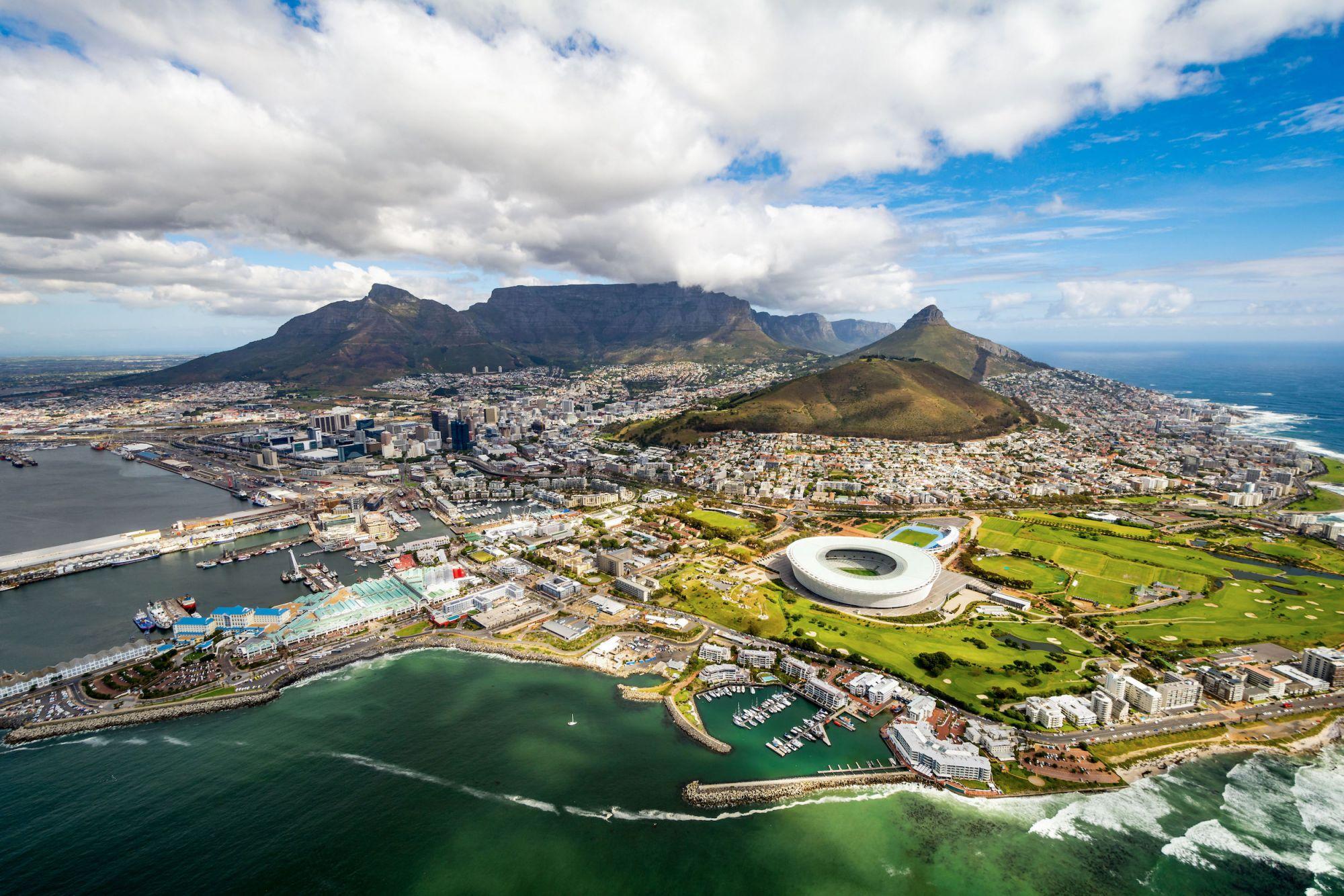
Cape Town, South Africa ©Benjamin B/Shutterstock
What to see in Cape Town
Cape Town is putting what it learned in 2014, when it was the World Design Capital, to good use in transforming the city and improving the quality of life of its inhabitants. With the brightly painted facades of Bo-Kaap houses and Muizenberg beach cabins, fascinating street art and numerous Afro-chic guesthouses, Cape Town is a very inviting metropolis. But above all, it is a multicultural city, where everyone has a fascinating - and sometimes moving - story to tell. When the time comes to go home, you will probably leave your heart behind, but in the meantime, here are seven things to do during your stay.

Table Bay as seen from Table Mountain, Cape Town ©Artie Photography (Artie Ng)/Getty Images
1. Table Mountain with a Cape Town view
Formed some 600 million years ago, the iconic, flat-topped Table Mountain is like a canvas depicting the diverse floral kingdom of the Cape and South Africa. The mountain is visible from several points in Table Mountain National Park, but a visit to Cape Town is not complete without climbing to the top.
Most visitors reach the summit of Table Mountain by cable car; the views from the revolving cabins and from the top of the mountain are simply phenomenal. At the summit there are a few souvenir shops, a nice café and some easy hiking trails.
The most challenging of the many paths from Gardens to the summit is the one through Platteklip Gorge (3 km): accessible from Tafelberg Rd, the route follows the steepest and most vertical route and takes about two hours and 30 minutes of brisk walking to the top station of the cable car. The path is completely exposed to the sun, so set out early in the morning and make sure you have enough water and sun cream with you.

Posters at the Robben Island Prison Museum, where Nelson Mandela spent long years of imprisonment ©MarcPo/Getty Images
2. Robben Island
Used as a prison from the early days of the Dutch East India Company until 1996, this island has been listed as a UNESCO World Heritage Site to pay tribute to all those who - like Nelson Mandela - spent long years of imprisonment there in the name of democracy. This place, one of the must-visits in South Africa, can only be accessed by participating in an organised excursion, which usually takes about four hours, including the trip on the ferry that sails from the Nelson Mandela Gateway on the Waterfront. We strongly advise you to book online well in advance, as places available for guided tours sell out quickly.

Company's Gardens, Cape Town ©Ariadne Van Zandbergen/Lonely Planet
Sign up for our newsletter! Get weekly travel tips, special offers, stories from around the world and 30% off your first order. 30% discount on your first order.
3.City Bowl
In this area you will be amazed by interesting museums, gardens and beautiful art deco and Victorian buildings. In particular, don't miss:
District Six Museum A touching museum that reconstructs the memory of the former vibrant, multi-racial neighbourhood wiped out by apartheid and the 60,000 or so people who lived there before the forced evictions of the 1960s and 1970s. Many township tours depart from this neighbourhood to illustrate the history of the laws that restricted freedom of movement in apartheid South Africa.
Company 's Garden Built to grow vegetables by the Dutch East India Company, these shady, leafy gardens are a lovely place to indulge in a moment of relaxation.
Bo-Kaap This is one of the most photographed neighbourhoods in the city for its picturesque, low-roofed, brightly coloured houses - many of which have been declared historical monuments - overlooking narrow cobbled streets. In the mid-18th century this district served as a military garrison, while around 1830 it was the scene of the first claims by freed slaves. The most picturesque streets are Chiappini, Rose and Wale.

Cape Point, the most spectacular promontory in Cape of Good Hope ©Photography by Jeremy Villasis. Philippines./Getty Images
4.Cape of Good Hope
Commonly referred to as Cape Point after the name of its most spectacular (but less famous) headland, this part of Table Mountain National Park, covering an area of 77.50 square kilometres, is characterised by an absolutely stunning landscape, with beautiful hiking trails, rich bird life and almost always deserted beaches. Reservations are required to hike the Cape of Good Hope Trail, a spectacular 33.8-kilometre loop trail.
Recommended guides and products:
Travel guide
South Africa, Lesotho and Swaziland
5. Kirstenbosch National Botanical Garden
The beautiful location and the very special flora contribute to making these botanical gardens, covering an area of 52.8 square kilometres, one of the most beautiful green oases in the world. At Gate 1, the main entrance at the Newlands end of the gardens, you will find a tourist information centre, a beautiful gift shop and the greenhouse.
Added in 2013 to mark the centenary of the Botanic Gardens, the popular Tree Canopy Walkway (commonly called Boomslang, after an arboreal snake) is a winding steel and timber walkway that winds above the trees and provides wonderful views.
Enquire about guided walking tours (free of charge) or hire the MyGuide electronic guidebook, which will provide you with interesting information about the many plant species you will encounter as you walk along the marked circuits.

A sea lion on the V&A Waterfront ©littlewormy/Shutterstock
6.V&A Waterfront
This historic harbour still in operation occupies a particularly spectacular location and is home to a large number of attractions tailored to tourists, including a plethora of shops, restaurants, bars, cinemas and a variety of boat tours. The Alfred Basin and Victoria Basin, completed in 1860, were named after Queen Victoria and her son Alfred. Although it is now too small to berth today's merchantmen and giant tankers, the Victoria Basin is still used by tugs, fishing boats and various types of vessels that service the harbour. In the Alfred Basin, on the other hand, it is possible to see several ships in dry dock.
Read also:

7.Boulders Penguin Colony
This picturesque area dotted with giant boulders bordering small sandy bays is home to a colony of around 3000 delightful African penguins. From the Boulders Visitor Centre, located on the edge of the conservation area (part of Table Mountain National Park) at Foxy Beach, a boardwalk leads down to Boulders Beach, where you can descend to the beach and get up close to the friendly animals. However, do not give in to the temptation to pet them, as they have very sharp beaks that can cause serious injuries.
Read also:

When to go to South Africa
December - February High summer season. Warm, dry weather and a rich series of events.
March - April Sunshine, beautiful autumn colours and a wealth of events. Avoid the crowded Easter period.
October - November In spring, beautiful flowers bloom and the sunset concerts start in Kirstenbosch.
Related articles
South Africa Sights: the 13 most beautiful places
Township Tourism in South Africa: On the Road in Soweto
Safari in South Africa: These are the most beautiful parks for safaris + travel tips
Safari in South Africa: prices, when to go and where
Safari in South Africa: 8 tips for the first time
Galway attractions: 13 beautiful places you must see Top Galway attractions
Where to go on honeymoon in October