Lisbon's top sights at a glance
Lisbon is teeming with impressive buildings. To be able to explore the Portuguese metropolis at your leisure on your sightseeing trip, you should plan four to five days. If you want to make one or two excursions or simply immerse yourself in the life of the locals, you can also spend a whole week in the city.
Today I'll take you to the districts of Baixa (sights 1-4), Alfama (5-12) and Belém (13-16). Have fun on your trip!
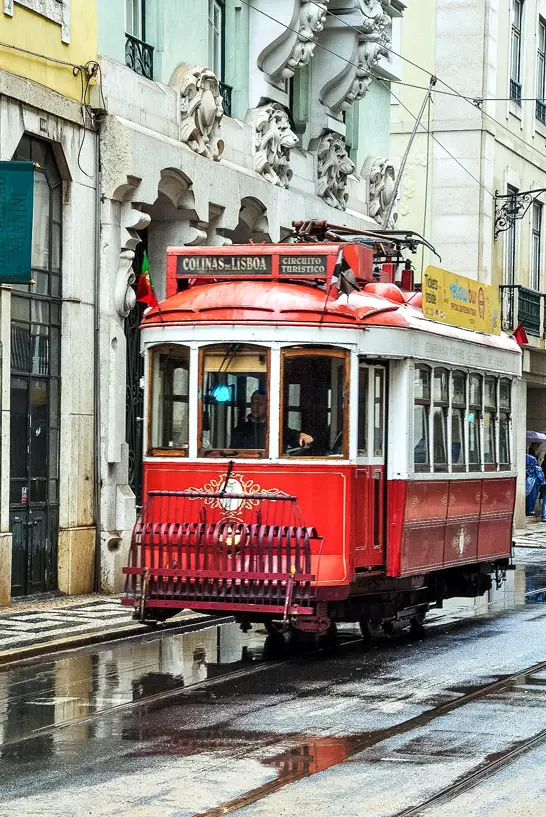 Lisbon enchants with its unique flair and many great sights. Have fun with our travel tips for an unforgettable holiday
Baixa - Lisbon's special city centre
 A typical street scene in Baixa
Our city tour begins with a visit to the Baixa ("lower city") district, which was almost completely destroyed by a severe earthquake in 1755. In the years that followed, the buildings and monuments were rebuilt to be earthquake-proof and today impress with their imposing neoclassical architecture.
The heart and centre of Lisbon invites you to stroll and linger with its numerous shops, cafés and restaurants. You can definitely look forward to a unique ambience, countless activities and many beautiful squares . Already curious about the most beautiful sights? Vamos - let's go!
1 Rossio
 The Rossio is officially called Praça Dom Pedro IV and is one of the top sights in Lisbon - Photo: Depositphots by sepavone
When visiting the Baixa, you're bound to pass Rossio. The official name of the square is actually Praça Dom Pedro IV, but since the Middle Ages it has been called Rossio, which means "field without inhabitants" and comes from the fact that the square used to be in an open field.
Nowadays, it is an important meeting and transport hub, with a station that is well worth seeing. The trains to Sintra also leave from here - but more about that later. You can follow the hustle and bustle at this sight in one of the many small cafés.
For all foodies here foodies, here's an insider tip: Beira Gare offers traditional dishes traditional dishes such as salgados (deep-fried dumplings, usually filled with meat or fish). fish) and is good for the stomach as well as the wallet. (Address: Praça Dom João da Câmara 4, opening hours: Monday to Saturday 6am-2pm, closed on Sunday).
The square got its present the square in the 19th century. In the middle of the Rossio, the 23-metre-high of the Portuguese King Pedro IV - who gave his name to the square - stands out. who gave the square its name. The two French bronze fountains also bronze fountains also date from the 19th century. On the north side of the Rossio is the Teatro Nacional Dona Maria II, which was destroyed by fire in 1964. destroyed by fire in 1964 and rebuilt true to the original.
When visiting the Rossio, you should also pay attention to the floor: The wavy pattern of the black and white tiles is a beautiful example of the so-called calçada, the typical Portuguese mosaic pavement that you will come across more often in Lisbon. In this case, it is reminiscent of the golden age of seafaring. Be careful not to get seasick!
2 Praça da Figueira
 The Praça da Figueira is another very worth seeing square in the Baixa - Photo: Depositphoty by gumbao
Only one row of houses the second important square in the Baixa, the Praça da Figueira. Figueira. It was built in 1755 on the grounds of the All Saints' Hospital and quickly developed into a central market place. Even today you can still enjoy many local specialities in the Mercado da Baixa . specialities. (Address: Praça da Figueira 6D, opening hours: daily 9am - 9pm) o'clock)
A detour to Praça da Figueira is also worthwhile, especially for those with a sweet tooth: Behind number 18 is the Confeitaria Nacional, Lisbon's oldest bakery, where you can enjoy the delicious Bolo Rei - candied fruit cake. Bom apetite! (Address: Praça da Figueira, 18 B, opening hours: Monday to Thursday 8am-8pm, Friday and Saturday 8am-2pm, Sunday 9am-2pm).
Finally, take a look at the bronze statue with the equestrian statue of King João I in the middle of the square. It's a sight not to be missed.
Tip: Great fun is the city tour by tuk tuk ( book here*).
3. Elevador de Santa Justa
 The Elevador de Santa Justa is of course also one of the top sights in the Portuguese capital.
Continue on to a sight that will impress you from afar - the Elevador de Santa Justa. A ride on the lift is a must on your to-do list. The 45-metre-high iron lift, decorated in neo-Gothic style, was built in 1902 and connects the Baixa with the higher-lying Chiado district. A technical masterpiece, don't you think?
Two historic wooden cabins decorated with brass fittings take you up to the heights. On the short ride in the lift, you don't see much apart from the scaffolding, but the view from the top is all the more magnificent. From the viewing platform on the roof of the lift, you have the best view of the Castelo de São Jorge and the roofs of the Baixa. Now, at the latest, I have fallen in love with Lisbon. You simply have to see the city like this.
All info:
Address:
R. do Ouro, 1150-060 (Google Maps)
Opening hours:
Mid-April to October daily 7:30am-2pm, November to April daily 7:30am-2pm.
Viewing platform:
Mid April to October daily 9am-2pm, November to April daily 9am-2pm
Admission: €1.50
Entrance fee:
Return journey 5.30 euros (or included in the day ticket for local public transport)
⭐ The best travel guides for your trip to Lisbon
Lisbon is never boring bored in Lisbon, as there's so much to discover around every corner. These exciting travel guides give you more insider tips and reveal many a secret about the secrets about the Portuguese capital.
4 Praça do Comercio
 From the Arco da Rua Augusta you have a great view over Lisbon - Photo: Depositphotos by milosk50
The Rua Augusta, a beautiful promenade in the heart of the city, leads you from Rossio directly to Praça do Comercio. do Comercio, the third and probably most impressive square in the Baixa. Before destroyed by the devastating earthquake, the old royal palace stood here. royal palace. Goods from the colonies were traded at the nearby port - hence the name of the square. from the colonies - hence the name of the square.
After 1755, it was given its U-shape open to the Tagus with long arcaded walkways and became the seat of the customs and port administration. Since 1775, the equestrian statue of King Dom José I has stood here. Although he was one of the most unpopular kings in the history of Portugal, he financed the reconstruction of the square. This is a sight you must see.
Nowadays, the square, which measures 170 by 170 metres, the most you'll ever see on the square is sunglasses. Your You can rest your feet in one of the surrounding cafés, from where you can once again the size of the square and its location on the Tagus.
Tip for a great photo spot: From the viewing platform of the triumphal arch Arco da Rua Augusta you have a spectacular view of Lisbon and the Tagus, especially at sunset. (Opening hours: daily 9-19 h, price: 3 euros)
Alfama - a charming quarter full of history
 In Alfama you will discover many exciting photo motifs
From the Baixa, we now head to the Alfama, Lisbon's oldest district. The streets, so picturesque today, look back on a dark past: after the Moors withdrew from Portugal, the Alfama lost its importance and became a poor and red-light district. This makes the quarter a sight in itself.
Nowadays there is Alfama has been transformed into a modern craft quarter. craftsmen 's quarter. However, the district has retained its original charm. has retained its original charm. Just let yourself drift through the labyrinth of alleyways and you too will of alleys, and you too will be convinced of its special charm. charm.
In contrast to the Baixa, the quarter was largely spared the earthquake of 1755, which is why you can marvel at some of Lisbon's most important buildings here.
You can also get lots of great information on a guided tour of Alfama and the cathedral ( book here*).
Great things to do in Lisbon
Activity | Price | Ticket |
Tandem paragliding in Lisbon, Portugal | from 70 Euro | |
Coasteering and Speedboat Tour in the Arrabida Nature Park near Lisbon | From 40 Euro | |
From Lisbon: Guided tour of Sintra, Regaleira and the Pena Palace. | From 65 Euro | |
From Lisbon: Comporta and Setúbal excursion with horse riding | From 89,99 Euro |
5 Catedral Sé Patriarcal
One of the top sights in the Alfama is the Catedral Sé Patriarcal (also Igreja de Santa Maria Maior). On the site where there was previously a Moorish mosque, construction of the church began as early as 1147, making the cathedral the oldest church in Lisbon. From the front, its two bell towers are somewhat reminiscent of the Notre-Dame church in Paris, which was built around the same time. This attraction definitely has to be on your sightseeing list.
The cathedral has Romanesque and Gothic elements, but has been rebuilt several times over the rebuilt several times. In the 20th century, it was given an impressive rose window above the Gothic portal, depicting the different eras of Christianity. Christianity.
There is also much to admire in the to marvel at in its interior. Particularly worth seeing are the gothic tombs from the middle of the 14th century, the nativity scene from the year 1766 and a 12th-century baptismal font in which St. Anthony is said to have been baptised. Saint Anthony was baptised. You should also visit the archaeological exhibition in the cloisters to the east should also be visited. (Opening hours of the cloister: Monday to Saturday 10 a.m. - 6 p.m., Sunday from 2 p.m., May to September until 7 p.m. until 7 p.m., price: 2.50 euros)
The cathedral's treasury not only houses ecclesiastical jewellery, but also the ark with the relics of St. Vincent, the patron saint of Lisbon. According to legend, two ravens stood vigil on the boat that transported the remains to Lisbon. For this reason, the coat of arms of the city of Lisbon also features two ravens on a boat. (Treasury opening hours: Monday to Saturday 10am-5pm, closed on Sunday, price: €2.50, in combination with the cloister €4).
All info:
Address:
Largo da Sé (Google Maps)
Opening hours:
daily 9-19 h
6 Miradouro de Santa Luzia
 Alfama is the oldest district in Lisbon and absolutely worth seeing. Here is the view from the famous Miradouro de Santa Luzia viewpoint.
On your way through the Alfama you should not miss the view from the Miradouro de Santa Luzia . not to be missed. The viewpoint offers a spectacular view of the mouth of the Tagus the mouth of the Tagus and the sea of rooftops in the Alfama.
The Miradouro is also a sight in itself: apart from the magnificent panorama, you can admire the beautiful azulejos - artistic ceramic tiles - on the walls of the terrace and on the wall of the neighbouring church Igreja de Santa Luzia, which retell the history of Lisbon before the great earthquake of 1755. Together with the view, they make a great photo spot - your Instafeed will be pleased.
7 Castelo de São Jorge
 View from the Castelo de São Jorge over the city
From the miradouro, we now head steeply uphill to the Castelo de São Jorge, another of the Alfama's sights, if not the sight par excellence. The fortress was built by the Moors before the 11th century and reconquered in 1147 by Alfonso the Conqueror, who was the first king of Portugal to found the Kingdom of Portugal.
In the late 14th century, the royal castle was then dedicated to King João. Unfortunately, the castle was not spared from the earthquake of 1755 and was and fell into oblivion. It was not until the 20th century that it was rediscovered and declared a national monument in 1910.
Exploring the 6000-square-metre complex is a very special adventure - and a sporty one at that. You can not only the old fortifications of the fortress, but also get an insight into excavations from the excavations from the Moorish, Roman and Phoenician periods. Phoenician period. On top of that, you'll be treated to a unique view of the Tagus and the whole of Lisbon.
Another highlight is a trip to the Torre de Ulisses, where you can see the where you can see a 360-degree image of Lisbon via the camera obscura . Lisbon via the camera obscura. Also worth a visit is the pointed arch house with five arches and a carved door decorated with arabesques from the 17th century. from the 17th century.
 The old fortress is definitely one of the must-see sights.
Be sure to bring a fully charged camera and plenty of time, because there is no shortage of great photo opportunities and sights here.
Tip: You can book your online ticket* for the Castelo de São Jorge without queuing and with an escort here.
All info:
Address:
Rua de Santa Cruz do Castelo (Google Maps)
Opening hours:
November to February 9am-6pm, March to October 9am-2pm.
Camera Obscura:
Monday to Friday 10am to 4pm, Saturday and Sunday 10am to 1pm.
Admission:
10 euros for adults
8 Igreja de Santa Engrácia - Panteão Nacional
 You can see the imposing Igreja de Santa Engrácia from afar - Photo: Depositphotos by maxxyustas
Its dome can be seen from afar: The Igreja de Santa Engrácia is an imposing baroque building whose construction began in 1681. However, the church was not completed until 1966 - more than 300 years later. For this reason, you can still admire architectural elements from different eras at this sight.
Today, there is a viewing platform on the four (never completed) towers, from which you have a great view of the red roofs of the Alfama. Inside, you must see the impressive organ and the decorations made of different coloured marble.
 The interior of the church is also very impressive - Photo: Depositphotos by Lenorlux
After its completion, the church was converted into the Panteão Nacional . That's why today you can admire the tombstones of famous Portuguese - among them the fado singer Amália Rodrigues (by the way, the only woman in the Panteão Nacional). Who knows, maybe one day football god Cristiano Ronaldo will find his final resting place here.
You can also explore the seven hills on an e-bike tour ( book here*).
All info:
Address:
Campo de Santa Clara (Google Maps)
Opening hours:
April to September 10am to 6pm, October to March 10am to 5pm, closed Mondays and major holidays.
Admission:
4 euros for adults
9 Eléctrico 28E
 A ride on the tram line 28E is a must in Lisbon and a small attraction
After so much After so much sightseeing, your legs deserve a break. A ride tram line 28E is the perfect way to take a break and is a must a must for all visitors to Lisbon - successfully killing two birds with one stone. two birds with one stone.
The ride in a traditional yellow Remodelado - as the trams from the 1930s are called - is a very special experience: the tram not only winds its way through the narrow streets of the old town, but also conveniently passes many, less well-known Lisbon sights such as the Basílica da Estrela or the Portuguese Parliament in Sao Bento. Just keep your eyes open and enjoy the view! Driving along numerous photo spots is simply a must-see in Lisbon. However, beware of pickpockets, especially in a full car.
For the all-inclusive tour, simply get on in the Alfama - for example at the Miradouro de Santa Luzia - and ride to the last stop "Campo Ourique (Prazeres)", where one of my favourite sights awaits you. You can find the current timetable of the Eléctrico 28E on the website.
Tip: Just like the Elevador de Santa Justa, you can use the day ticket for public transport or the Lisboa Card for a tram ride. An alternative to the 28E is the 12E line, which also uses historic carriages and may not be quite as crowded. The guided city tour with the 28E is also worthwhile(to online tickets*).
10 Cemitério dos Prazeres
 The Cemitério dos Prazeres cemetery is a real insider tip in Lisbon.
Directly at the terminus tram line 28E, the Cemitério dos Prazeres is one of my absolute insider tips for you. The cemetery was founded in 1833 as a result of a cholera epidemic of the same year on the site of a popular park for excursions. This is probably where its name comes from, which translates as "cemetery of delights". delights".
A visit to the cemetery is like a journey through a small town. The impressive tombs resemble small and large houses arranged in a chessboard pattern on both sides of the 80 or so streets and avenues. Here transience meets the splendour of ancient times: The above-ground crypts from the 19th century are more reminiscent of churches and chapels. chapels rather than graves and tell many exciting stories if you look closely. exciting stories if you look closely.
In addition to ordinary citizens many famous personalities are buried in the cemetery, as the signs on the graves will the signs on the graves. Pedro de Sousa Holstein, a Portuguese statesman Portuguese statesman and duke, had the largest family tomb in Europe built here. Europe's largest family tomb. Inspired by the design of inspired by the design of Solomon's Temple and the Egyptian pyramids. family members find their final resting place there.
As you can see, this cemetery is a very special place with a very special atmosphere. By the way, from the western wall of the cemetery you have a great view of the Ponte 25 de April and the statue of Christ, which are now the next top sights on the programme.
All info:
Address:
Praça São João Bosco 568 (Google Maps)
Opening hours:
October to April daily 9am to 5pm, May to September daily 9am to 6pm.
11 Ponte 25 de Abril
 The Ponte 25 de Abril is reminiscent of the Golden Gate Bridge in San Francisco.
Red, tall and majestic: the Ponte 25 de Abril was opened in 1966 and, at 2278 metres long, is the third longest suspension bridge in the world. This top sight connects the district of Alcântara with the city of Almada on the other side of the Tagus and is accessible by car as well as by train.
The Ponte, as it is called by the locals, bears a strong resemblance to the Golden Gate Bridge in San Francisco, California. The comparison goes in the right direction: the bridge was built by the American Bridge Company, which also built the Oakland Bay Bridge. Even the steel was imported from the USA.
The figures also speak for themselves 390,000 people and 150,000 vehicles use the bridge every day. A a photogenic motif to boot.
Finally, a fun fact for all 007 fans: George Lazenby, alias James Bond, drove across the Ponte de 25 Abril in 1969 in "On Her Majesty's Secret Service".
An unforgettable experience, by the way, is a sunset cruise on a sailboat ( book here*).
12 Cristo Rei
 The Jesus statue Cristo Rei is one of the most famous sights in Lisbon - Photo: Depositphotos by tsuguliev
Perched high above the city, the CristoRei statue is one of Lisbon's most famous landmarks(website). To be exact, it is actually located in the city of Almada on the other side of the Tagus River and, at 28 metres high, it is the seventh tallest statue of Jesus in the world. Its 75-metre-high base and its location on a hill make it look very lofty and powerful - you simply have to see it.
This must-see also reminiscent of another sight, namely the statue of Christ in Rio de Janeiro. de Janeiro. This is because the then Archbishop of Lisbon was impressed and inspired by it after a trip to Brazil. was impressed and inspired by Rio after a trip to Brazil and advocated the construction of a similar similar statue in Lisbon. It was decided to erect it as a thank God if Portugal was spared the Second World War. The happy event occurred and in 1959, after ten years of construction, the statue of Christ was inaugurated. after ten years of construction.
Today it is not only important place of pilgrimage, but also an excursion destination that you should you should not miss. The highlight is, of course, the viewing platform, from where you have a gigantic panoramic view of the Lisbon skyline, the Tejo Tejo and the Ponte. With skilful photos, you might even be able to get one or two of the other you might even fool a few people back home into thinking you're in San Francisco Francisco instead of Lisbon.
Tip: The best way to reach Cristo Rei is by boat from the Cais do Sodre ferry terminal, where you'll have a great view of the statue and the Ponte 25 de April on your way to Cacilhas. Check the website for departure times. From Cacilhas you can either walk or take bus 101 to the statue.
All info:
Address:
Alto do Pragal, Av. Cristo Rei, 2800-058 Almada (Google Maps)
Opening hours:
1-14 July and 1-20 September 9:30am-6:45pm, 15 July-31 August 9:30am-7:30pm, 21 September-30 June 9:30am-6pm.
Admission:
5 euros for adults, 1 July to 15 October 6 euros.
Belém - pure culture and pure culinary delights
The district of Belém lies about 6 kilometres west of the city centre and is easily reached by tram from the Praça do Comércio and is easily reached by tram. Most of the buildings were commissioned by King Manuel I and still characterise the district today. quarter, which was hardly damaged by the earthquake of 1755.
Apart from the many historical Apart from the many historical sights and museums, you can also do something good for your stomach here: Belém is the birthplace of the world-famous Pastéis de Belém, small puff pastry cakes small puff pastry cakes with a custard cream and incredible addictive potential. Whether Whether you are a culture lover or have a sweet tooth, a visit to this quarter will will remain in your memory.
13th Mosteiro dos Jerónimos
 The Mosteiro dos Jerónimos monastery is one of the top attractions. This place is not to be missed
Probably the most impressive building in Belém is the Mosteiro dos Jerónimos, which is over 300 metres long. over 300 metres long, it will amaze any visitor. In 1501, King Manuel I commissioned of King Manuel I, the construction of the Hieronymite monastery began. on spices imported from Africa and the Orient.
During the almost 100-year various master builders contributed to its unique architecture. architecture. In addition to the so-called Manueline style, the monastery was also the monastery, which - as the name already suggests - was dedicated to the monks of the monks of the Hieronymite order.
Particularly impressive is the richly decorated limestone façade and the cloisters inside the of the extensive monastery complex. Here you can also visit the tombs of the kings. of the kings, including that of Manuel I. In the monastery church Santa Maria de Belém are buried two other national heroes: The navigator Vasco da Gama and the poet Luís de Camões.
 Inside the monastery
The Hieronymite Monastery has been a UNESCO World Heritage Site since 1983 and is an architectural masterpiece without equal. For us, one of the most beautiful places in Lisbon.
All info:
Address:
Praça do Império (Google Maps)
Opening hours:
October to April 10am to 5:30pm, May to September 10am to 6:30pm, closed Mondays and public holidays.
Admission:
10 euros for adults
14 Padrão dos Descobrimentos
 The Padrão dos Descobrimentos monument is worth a detour
The Padrão dos Des cobrimentos(website) is located directly on the banks of the Tagus and can be translated as "Monument to the Discoveries". The monument was erected in 1960 on the 500th anniversary of the death of Henry the Navigator and symbolises a caravel led by Henry. He is followed by another 32 important Portuguese explorers, including Vasco da Gama and Ferdinand Magellan.
It is also worth taking the the lift to the observation deck , from where you can not only enjoy the Tejo, the Ponte and the Torre de Belém, but also the Hieronymite monastery but also the Hieronymite Monastery in all its splendour.
All info:
Address:
Avenida Brasília(Google Maps).
Opening hours:
March to September daily 10am to 7pm, October to February Tuesday to Sunday 10am to 6pm.
Admission:
6 euros for adults
15 Torre de Belém
 The Torre de Belém is one of Lisbon's top sights.
Only a few minutes minutes' walk away is the Torre de Belém, one of Lisbon's most famous Lisbon's most famous landmarks. Just like the Mosteiro dos Jerónimos, the tower has been a UNESCO UNESCO World Heritage Site since 1983 and was commissioned by King Manuel I in 1515, who did not live to see its completion in 1521.
The lighthouse and watchtower symbolises Portugal's importance at the time as the world's leading maritime power. and for a long time served as a defence against enemy ships. When the Lisbon in 1580, it was even used as a prison and later as a customs house. customs house.
The Torre once stood in the middle on a rock formation in the middle of the Tagus estuary, but over time it has moved closer to the but over time it has moved closer to the land and now lies close to the shore. The building is an impressive example of the Manueline Gothic style and also has Moorish Moorish influences. On the north-west side of the tower is the first the first European image of a rhinoceros, which Portuguese seafarers Portuguese sailors brought back from their voyage to India.
Apart from the great viewfrom the top you can also visit the four floors of the 35-metre-high tower. tower. They were used for different purposes: On the 1st floor is the ornate and richly decorated King's Hall, Soldiers, on the other hand, were stationed on the cool and gloomy ground floor, which also served as a prison and weapons store. which also served as a prison and weapons store.
As you can see, the Torre de Belém is a sight full of exciting stories that will also captivate you. You should definitely visit this highlight!
Tip: The Yellow Boat Tour on the Tejo is very popular ( book online*).
16th Confeitaria Pastéis de Belém
 The Confeitaria Pastéis de Belém is a must on every trip to Lisbon - Photo: Depositphotos by tupungato
Our last stop in Belém is the Confeitaria Pastéis de Belém, where the famous Pastéis de Belém have been baked since 1837. Originally, the top-secret recipe came from the monks of the Mosteiro dos Jerónimos, who passed it on to a sugar refinery.
The delicious tarts consist of puff pastry and a topping of cream with cinnamon or icing sugar. By the way, in Portugal and all over the world they are also known as Pastéis de Nata!
The Confeitaria in Belém is not a UNESCO World Heritage Site, but it is at least as well visited as the monastery. Here, 20,000 of the little sweet tarts are sold every day. No wonder: with the divine taste of the egg cream on the crispy puff pastry, you will easily become a repeat offender. You definitely have to check it out.
By the way, the Confeitaria Pastéis de Belém is one of the stops on the guided tour through the historic quarter of Belém*.
Other sights in Lisbon
If you are interested in more unusual sights and tips, we recommend the following highlights in Lisbon:
Oceanário
Teleférico do Parque das Nações
Bairro Alto district
Igreja de Sao Roque
LX Factory Industrial Estate
Lisbon has much more to offer than the sights I have just presented. If you have enough time or if it's raining and you don't want to hang out in the museum, I recommend a visit to the Oceanário.
It is the largest indoor aquarium in Europe and houses more than 8000 sea creatures. Here you can dive into the exciting underwater world and learn more about the big and small animals.
 The Teleférico do Parque das Nações cable car is one of the top attractions in Lisbon.
If you're not a fan of fish or aquariums, you can take the Teleférico do Parque das Na ções cable car near the Oceanário and enjoy the view of the Tagus River.
Just like the aquarium, it was built on the occasion of the World Expo 98 and gives you a new perspective on modern Lisbon.
All info:
Address:
Passeio das Tágides - Estação Norte (Google Maps)
Opening hours:
14 March to 29 May 2020 11am to 6pm, 30 May to 13 September 2020 10:30am to 8pm, 14 September to 24 October 2020 11am to 7pm, 25 October 2020 to 12 March 2021 11am to 6pm.
Admission:
One-way ticket 4 euros, return ticket 6 euros.
Night owls are in good hands in Bairro Alto. In the picturesque alleys of the nightlife district there are many bars, clubs and tascas (small restaurants) where you can experience traditional fado.
Also worth seeing is the Igreja de São Roque, an inconspicuous church from the outside, but one of the most glamorous churches in Europe thanks to its magnificent gold ornamentation inside.
 The Igreja de São Roque, a very inconspicuous church from the outside, is absolutely worth seeing - Photo: Depositphotos by demerzel21
Finally, I have to show you one of the hippest places in Lisbon. It's about the old industrial area LX Factory. While there used to be factories here, today you'll find trendy shops, cute cafés and exciting concept stores. Street art and colourful facades complete the creative ensemble.
It's worth a browse, especially in the unusual bookshop Ler Devagar, where you can still marvel at old printing presses. Every Sunday there is also a flea market on the grounds.
Excursion tip Sintra
 The Palácio Nacional da Pena is one of the top sights in Portugal and can be reached quickly from Lisbon.
If you have enough time If you have enough time in your luggage, a day trip to Sintra is always a good idea. The town at the foot of the mountain range of the same name will delight you with its extraordinary palaces palaces, ancient castles and a picturesque landscape.
The absolute highlight is a visit to the Palácio Nacional da Pena, which sits majestically on a mountain. enthroned on a mountain. Probably Portugal's most famous palace was built in the mid-19th century on the ruins of a monastery. It was built on the ruins of a monastery and was occupied by the royal familyuntil 1910. family until 1910.
 A visit to the famous palace is a must when you are on holiday in the region.
It enchants with its colourful facades and the combination of different architectural styles and inspired inspired Ludwig II to build Neuschwanstein Castle. On your tour of the castle spectacular view of the city of Sintra, and on sunny days you can even see sunny days you can even see as far as Lisbon. The 19th-century interior 19th centuryinterior is also impressive.
No wonder, then, that the fairytale castle - together with the surrounding cultural landscape and Sintra's other palaces - has been a UNESCO World Heritage Site since 1995. Not to be forgotten is the 85-hectare palace park, which invites you to relax and offers a pleasant change from the hustle and bustle of the city.
All info:
Address:
Largo Rainha Dona Amélia (Google Maps)
Opening hours:
28 March to 30 October 9:30 a.m. to 8 p.m., the palace is open until 7 p.m.
Admission:
7.50 euros park only, 14 euros park and palace.
 The Quinta da Regaleira estate is also a top excursion tip
Another top highlight in Sintra is the Quinta da Regaleira estate. Completed in 1910, it is located very close to the historic centre of Sintra. Besides the palace and a chapel, you will find a large park with lakes, grottos, fountains, bridges and an underground tunnel system.
 An absolute highlight is the fountain (or rather tower).
The easiest way to reach Sintra from Lisbon is by train . The journey from Rossio takes about 40 minutes and costs 2.25 euros. You can find the current timetable on the website of the train company.
Another insider tip for a day trip is Mafra. The town lies 40 kilometres northwest of Lisbon and is home to the impressive Palácio Nacional.
Lisbon's beaches
Although Lisbon may not be your first choice for a beach holiday, you don't have to miss out on a day at the seaside. There are several enchanting beaches in the vicinity of the Portuguese metropolis.
Carcavelos beach is particularly popular with surfers, but it is also well frequented, especially in summer. Only a short distance away are the beaches of Estoril and Cascais. You can reach them all in about half an hour by train from Lisbon.
Costa da Caparica is even closer. Like Lisbon, the municipality is located at the mouth of the Tagus into the Atlantic, but on the opposite shore on a peninsula. It's called Península de Setúbal - and if you go exploring here, you'll find even more unknown, more natural beaches.
Eating & Drinking in Lisbon
In Lisbon there are many bars and tascas, where you can get typical Portuguese food at affordable food at affordable prices. Here is a small overview with some tips:
A Tasca do Chico in the Bairro Alto offers delicious tapas and Caipirão - the Portuguese caipirinha - on Mondays and Wednesdays from around 9 pm. Fado music. It doesn't get much more atmospheric than this! (Address: Rua do Diário de Notícias 39, opening hours: Sunday to Thursday 7-2pm, Friday and Saturday 7-3pm)
The Ginja D'Alfama is also authentic. D'Alfama . In this small restaurant in the heart of the Alfama, you can enjoy not only tapas, you can also try Ginja, a Portuguese cherry liqueur, try it. (Address: Rua de São Pedro 12, opening hours: 10-24 hrs. closed on Tuesdays)
For all liqueur fans, a visit to the Bar A Ginjinha is a must. The Ginja was once created in this taproom and is still very still very popular with locals. (Address: Largo São Domingos 8, Opening hours: daily 9-22 hrs)
Also in the Baixa is the Tabuaria Do Paço, where you can find, among other things, many delicious fish and seafood dishes. many delicious fish and seafood dishes, for example Polvo à Lagareiro - Portuguese-style octopus. (Address: Rua da Alfândega 106, Opening hours: 12.30-24 h, closed on Wednesday)
Where to stay in Lisbon stay overnight - the best hotel tips
Hostel-goers are in good hands at the Lookout Lisbon Hostel (check rates here*), which scores points for its location in Bairro Alto and the traditional Portuguese breakfast included in the price. Another great low-budget option is the Home Lisbon Hostel (check prices here*) in the heart of the old town.
Both Browns Downtown Hotel (check prices here*) and My Story Hotel Ouro (check prices here*) impress with their modern and stylish décor and their location in the Baixa. A special experience is a night at the Lisboa Carmo Hotel (check prices here*), which delights with its luxurious rooms including a magnificent view of Lisbon's old town.
But there are more than just fancy hotels in Lisbon. For a trip with friends, you can also stay in one of the artfully furnished Lisbon Art Stay Apartments Baixa (check prices here*), which even have a roof terrace.
So what are you waiting for? Book now!
Great activities in and around Lisbon
Fancy some adventures in and around Lisbon? We have a tip for you:
How about a tandem paragliding flight in Lisbon, a different kind of sightseeing(book here*)?
Surf lessons and courses in Costa da Caparica(book here*)
Coasteering and speedboat tour in the Arrabida nature park near Lisbon (bookhere*)
Kayak and snorkel tour in Arrabida Nature Park near Lisbon (bookhere*)
Caving in the Arrabida Nature Park near Lisbon(book here*)
From the airport to the city centre
International travellers are likely to arrive at Aeroporto Humberto Delgado Lisboa. The best way to reach the city centre from the airport is directly by metro. The Lisbon Metro will take you to the city centre in about half an hour. First take the red line and then change to the green or blue line. One of the most central stops is Baixa-Chiado.
If it's your first time on the metro, you need to buy a very cheap rechargeable card. The prices are really affordable, as the ride itself also only costs about 1.50 euros. With the Lisboa Card, it's even free - you'll find more information right below.
Tip: the Lisboa Card
You're probably familiar with this principle from other cities. With the Lisboa Card, you can use public transport for free. It also gives you free admission to 29 sights and museums. On top of that, you can save a lot at many other attractions and also at restaurants and cafés.
For the money, a Lisboa Card is definitely worth it.
Things to know about Lisbon
The Portuguese capital has about 500,000 inhabitants.
Lisbon was founded by the Phoenicians in 1200 BC, making it the oldest city in Western Europe.
In 1755, large parts of the city were destroyed by a severe earthquake.
Lisbon is also called "cidade das sete colinas" ("city of the seven hills").
Lisbon is home to the Livraria Bertrand, the oldest bookshop in the world - it was founded in 1732!
I hope you enjoyed my city tour of Lisbon and were able to find the perfect tips and sights for you. The capital of Portugal is definitely worth a visit and highly recommended.