 Not only does our planet give us beautiful landscapes and natural wonders, but, thanks to the work of man, over the centuries, it has been filled with monuments, palaces and museums that attract thousands of visitors every year.
From America to Asia, passing through Europe and other continents, there are ancient and modern structures, located in different cities, that have a special charm, and all of them deserve to be seen in the course of a lifetime.
Here are the 20 most famous and visited monuments in the world!
NB: The following ranking is constantly being updated, is made by cross-referencing various data and takes into account the annual average number of visitors established over a 10-year period.
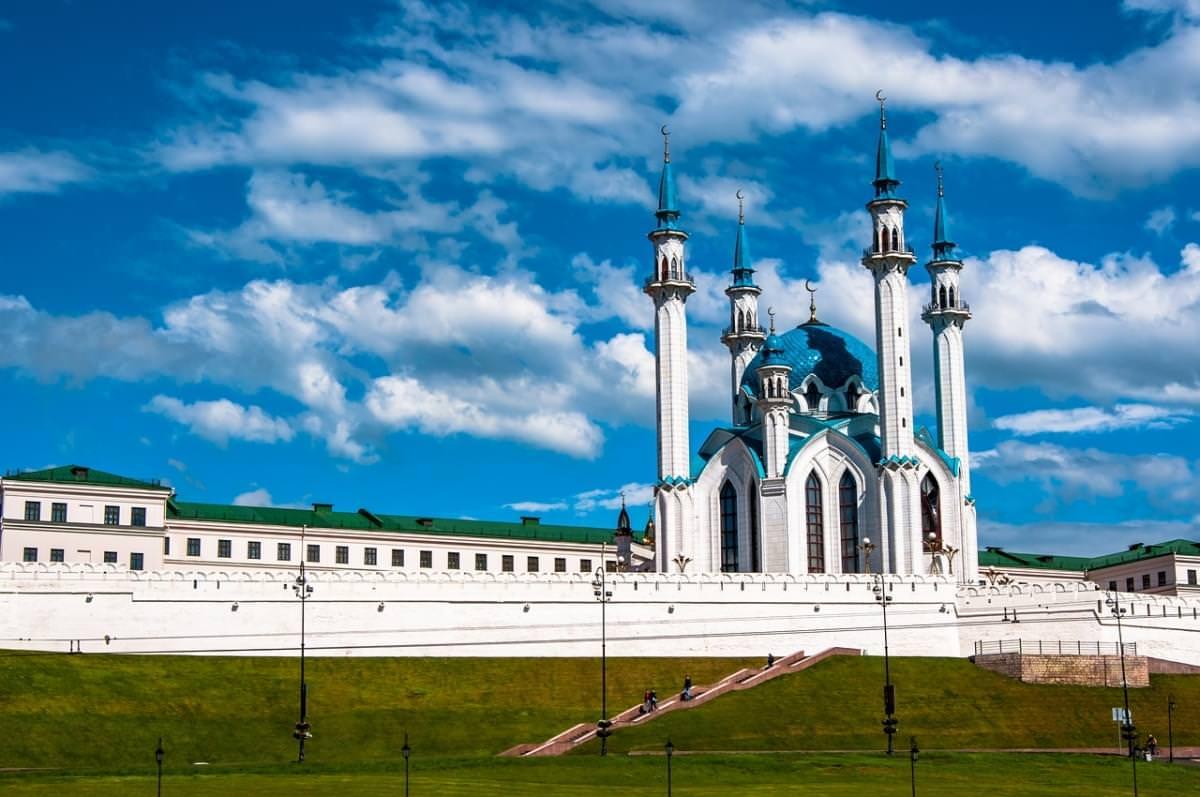
20 - Kazan Kremlin, Kazan-Russia
This Russian monument, in the city of Kazan, was built in the 16th century on the orders of Ivan the Terrible over the ruins of the Khan castle.
The structure includes many buildings and the oldest is the Cathedral of the Annunciation dating from 1554-62 characterised by six pillars and five apses.
Thelandmarks of the KazanKremlin are the leaning Sjujumbike tower and the Spasskaya tower, which serves as the main entrance near the monastery of the same name, where various buildings such as the Church of St Nicholas and the Cathedral of the Transfiguration are also located.
19 - Schonbrunn Palace, Vienna-Austria
 Another much-visited monument in the world is Vienna 's famous Imperial Palace, which was the seat of the Habsburg Empire from 1730 to 1918.
Located in what was once the countryside, now the western outskirts of the city, the entire complex includes the castle, a huge park, numerous fountains and one of the oldest zoos in the world, the Tiergarten Schonbrunn.
During your visit, don't miss the great Gallery, 40 metres long and almost 10 metres wide, which was once the venue for important court events such as balls, receptions and banquets.
SEE ALSO: Visit the Imperial Palace of Schönbrunn, Vienna: Getting there, prices and tips
18 - Wilanow Palace, Warsaw/Poland
 In the Warsaw district of the same name, this palace was built for King Jan III Sobieski in the late 17th century.
Besides being one of the most interesting buildings in the country, it is also one of the most visited monuments in the world.
Characterised by highly original architecture that mixes the Polish style with European art, it is known as the'Little Versailles'; the interiors are ornate and precious and outside there is a wonderful park where concerts and important cultural events such as the'Royal Summer Concerts' in the Rose Garden andthe 'International Summer Academy of Early Music' are still held.
17 - Orsay Museum, Paris-France
 This museum is located in Paris in a building designed in 1898 by the architect Victor Laloux, where a cavalry barracks and the old Palais D'Orsey previously stood.
After two years, work was completed and the 1900 Universal Exhibition was inaugurated.
Inside this museum you can admire mainly works by the Impressionists (Monet, Cezanne, Manet, Renoir, Degas, etc.) and Post-Impressionists (Gauguin and Vincent Van Gogh), but also paintings by authors from the second half of the 19th century.
SEE ALSO: What to see at the Orsay Museum in Paris: tips, prices and how to get there
16 - Pompeii, Naples-Italy
 It is famous for its ancient city buried by lava during the eruption of Vesuvius in 79 AD.
Every year its ruins attract thousands of visitors who come to discover the 66 hectares, 50 of which are excavated, where you can admire public and private buildings, monuments, sculptures, mosaics and paintings that have been recognised as a UNESCO World Heritage Site.
Don't miss the amphitheatre, the large and small theatre, the Forum, the Garden of the Fugitives, the House of Sallust and the Villa of the Mysteries with numerous frescoes and the Roman amphitheatre.
SEE ALSO: Visit to the archaeological sites of Pompeii and Herculaneum: How to get there, prices and advice
15 - Carskoe Selo Museum-Residence, St Petersburg-Russia
 Photo by Florstein. The Grand Palace of Carskoe Selo, also known as Catherine's Palace, was the summer residence of the Russian tsars and dates back to 1717 when it was built by order of Empress Catherine.
This building is located in Puskin, 25 km south-east of St. Petersburg, and is characterised by its rococo style and the typical'Golden Arrow', a distinctive construction method.
The rooms are all interconnected along a single axis; starting from the large ballroom and ending in the reproduction of the Amber Room, and in between, numerous rooms follow one after the other. Finally, the residence is completed by theimmense park divided into old and new gardens.
14 - National Palace Museum, Taipei-Taiwan
 Photo by CEphoto, Uwe Aranas. Dating back to 1965 and located in the hills north of the city, the National Palace Museum in Taipei is one of the most visited attractions not only in Taiwan but in the world.
Inside is a permanent collection of over 697,490 pieces of ancient Chinese artefacts and works of art spanning over 5000 years of Chinese history, from Neolithic art to the late Qing dynasty.
Among the exhibits are statues, ceramics, wall hangings, vases, rare books and precious documents.
SEE ALSO: What to see at the National Palace Museum in Taipei: tips, prices and how to get there
13 - Teotihuacan, Teotihuacan - Mexico
 A pre-Columbian city 40 km from modern Mexico City, Teotihuacan is thought to have been founded around 100 BC.
In 1987 it was designated a Unesco World Heritage Site and today is one of Mexico's major archaeological sites, among the most visited in the world.
Covering an area of 83 km2, it is known for its immense pyramids, multi-family residential complexes, numerous perfectly preserved murals and the'Street of the Dead' where the splendid Pyramid of the Sun, the largest complex in the heart of this ancient city, is located.
12 - Statue of Liberty Monument New York- America
 Located on rocky Liberty Island, an islet in the middle of Manhattan Bay in New York, the Statue of Liberty was built by Frenchman Bartholdi with the collaboration of Eiffel in 1886.
Asymbol of the Big Apple and the United States, this work consists of a steel lattice structure inside and is clad with 300 sheets of copper on the outside.
Ninety-three metres high, it depicts a woman, wearing a long robe, holding in her right hand a torch symbolising the eternal fire of freedom, and in her left hand a tablet inscribed with the date of American Independence, 4 July 1776.
11 - Independence National Historical Park, Philadelphia-America
 In the historic centre of Philadelphia, Pennsylvania, is one of the city's most famous historic buildings and one of the most visited in the world.
Also nicknamed'America's most historic square mile', it is anarea that encompasses several buildings: Independence Hall, the Liberty Bell Pavilion with the Liberty Bell, Carpenters' Hall, a beautiful Georgian-style building that became the site of the first American Congress and later a hospital for the wounded in the Revolutionary War.
The Second Bank of The United States and Franklin Court complete the park.
10 - National World War II Memorial, Washington D.C.- America
 In the capital of the United States, Washington DC, on the monumental National Mall, in addition to several important monuments, there is also the United States National Memorial.
Built in 2004, it is dedicated to the Americans who took part in World War II and is characterised by 56 granite pillars each 6 metres high (on which the names of the 48 states that formed the USA in 1945 are inscribed) arranged in a semi-circle around a square.
Two triumphal arches representing the Pacific and Atlantic Oceans and a pool with a fountain complete the structure.
9 - Vietnam Veterans Memorial, Washington, D.C.- America
 This memorial is also located in Washington and is one of the most visited in the world.
Completed in 1982, this work was built to commemorate the 58,318 American victims of the Vietnam War.
Also called'The Wall', the main building where the names of the victims are listed in chronological order of death, was built with black granite from India and consists of two large trapezoidal walls arranged in plan to form the larger'>' symbol.
8 - Peterhof Palace, St Petersburg -Russia
 An obligatory stop for anyone visiting St Petersburg, the palace and its gardens are among the most visited monuments in the world.
Located in the Gulf of Finland about 30 km from the city, they were the residence of the tsars until 1917 and are known as the Russian Versailles.
Built between 1714 and 1723 at the behest of Tsar Peter the Great, the complex includes numerous palaces, tree-lined avenues and numerous parks, but what is most attractive is the Grand Palace, the most imposing structure.
7 - Eiffel Tower, Paris-France
 Paris ' most famous monument and one of the most visited per year.
The tower was built in just over two years and was completed and inaugurated on 31st March 1889, by Gustave Alexandre Eiffel.
The intent was to commemorate French independence a century after the Revolution, but it was hotly contested by the artistic and cultural elite of the time.
The iron structure stands on the esplanade of the Champs de Mars, is about 312 metres high, weighs 7,300 tonnes and is divided into three parts, reached by lifts, resting on four pillars.
SEE ALSO: Visit the Eiffel Tower in Paris: How to get there, prices and tips
6 - Taj Mahal, Agra-India
 It is one of the7 wonders of the world and one of the most visited monuments is the Taj Mahal, which literally means'palace of the crown' and was built by the Indian emperor Shah Jahan to fulfil one of the promises he made to his wife before he died.
This magnificent site is located in Agra, India, and was completed in 1654 (work began in 1632) thanks to the labour of numerous craftsmen and materials from all over the world.
The complex consists of five main elements: the gatehouse, the garden, the mosque, the guest house and the tomb of Emperor Shah Jahan.
To these are added secondary structures, fountains and gardens with water channels and pools where the image of the marvellous Taj Mahal is reflected.
5 - Parthenon, Athens-Greece
 This building in the heart of the Acropolis in Athens was commissioned by Pericles in 447 B.C. and, with the intervention of architects of importance at the time, was finished in 432 B.C.
Called the Parthenon because it was a gift to the goddess Athena Parthnenos, it became the ultimate expression of the traditions and cultural life of Periclesian Athens.
Built in Doric style, it is entirely of marble and occupies an area of approximately 70 metres x 31 metres, with eight columns on the façades and 17 on the long sides.
Inside is the cella divided into three naves by a colonnade with two superimposed orders and an area intended to house the treasury of the Delio-Attic.
SEE ALSO: Visiting the Acropolis and Parthenon in Athens: Getting there, prices and tips
4 - Colosseum, Rome-Italy
 Originally known as the Flavian Amphitheatre of Rome, it is the largest amphitheatre in the world and one of the most visited monuments by Italian and foreign tourists every year.
Built in Flavian times in an area on the eastern edge of the Roman Forum, construction began under Vespasian in 71/72 AD and was inaugurated by Titus in 80.
Elliptical in shape with a perimeter of 527 metres, the arena measures 86x54 metres, occupies an area of 3,357 m2, was intended to seat between 50,000 and 87,000 people, and was originally 52 metres high.
It was formerly used for gladiator shows, hunting events, and drama re-enactments.
SEE ALSO: Visiting the Colosseum in Rome: How to get there, prices and tips
3 - Lincoln Memorial, Washington, D.C.- America
 Built in 1867 in honour of the 16th President of the United States, Abraham Licoln, this memorial is located on the National Mall in Washington, DC.
Shaped like a Greek Doric temple and made of Indiana granite and Yule marble from Colorado, it is a peripteral with 36 columns 10 metres high surrounding the cella.
Inside is the 20-foot-tall sculpture, made entirely of white marble, which depicts the president absorbed and pensive, gazing towards the east.
Lincoln is seated on the throne where two lictor fasces symbolising the authority of the Republic are carved.
2 - Palace of Versailles, Versailles-Paris
 The palace, also known as a palace or castle, is aformer royal residence of the Bourbons of France, 20 km from Paris.
It was built, between 1623 and 1683, at the behest of King Louis XIV who wanted to get away from the city and its citizens, it became the seat of political power of the French kingdom from 1682 when King Sole moved in with his court.
The royal palace, the second most visited monument in the world, occupies an area of 815 hectares (before the Revolution it occupied 8000) and includes 93 gardens that host festivals and events every year, the palace with its marvellous halls, the grand and the small Trianon (luxurious annexes).
SEE ALSO: Visiting the Palace of Versailles: Getting there, prices and tips
1 - Forbidden City, Beijing-China
 At the top of the most visited monuments in the world is the Forbidden City, or Imperial Palace, located north of Tiananmen Square in Beijing, China.
The construction of this residence began in 1406 and ended in 1420 and housed 24 emperors of the Ming and QIng dynasties.
It covers an area of 72 hectares, occupies a total area of 150,000 square metres and comprises 980 structures including palaces, courtyards and buildings.
It is divided into three parts comprising the line of defence, with the moat, walls over 10 metres high, watchtowers and four main gates.
Then there is the Outer Court with three main buildings and finally the Inner Court consisting of three important palaces.
The whole area is decorated, there is no lack of bronze or stone statues and the buildings are coloured in the imperial colours, yellow and red.