 TheMasai Mara is the natural extension of the Serengeti, one of East Africa's protected wilderness areas, and is located in the Rift Valley at an altitude of 1,500 to 2,200 metres. It is named after the Maasai people and the Mara River, which flows through the reserve from north to south.
The largest number of safaris take place here, where the famous big five can be spotted and, above all, the spectacular migration of wildebeest, zebras and antelopes can be enjoyed.
TheMasai Mara is one of the most expensive parks in Kenya and the largest. It has many more tracks than the others and it is easier to get close to the animals.
Here is all the information you need to organise your visit to the Masai Mara park.
Where it is located
The Masai Mara Nature Reserve is located in the south-west of Kenya, on the border with Tanzania, in the famous Rift Valley.
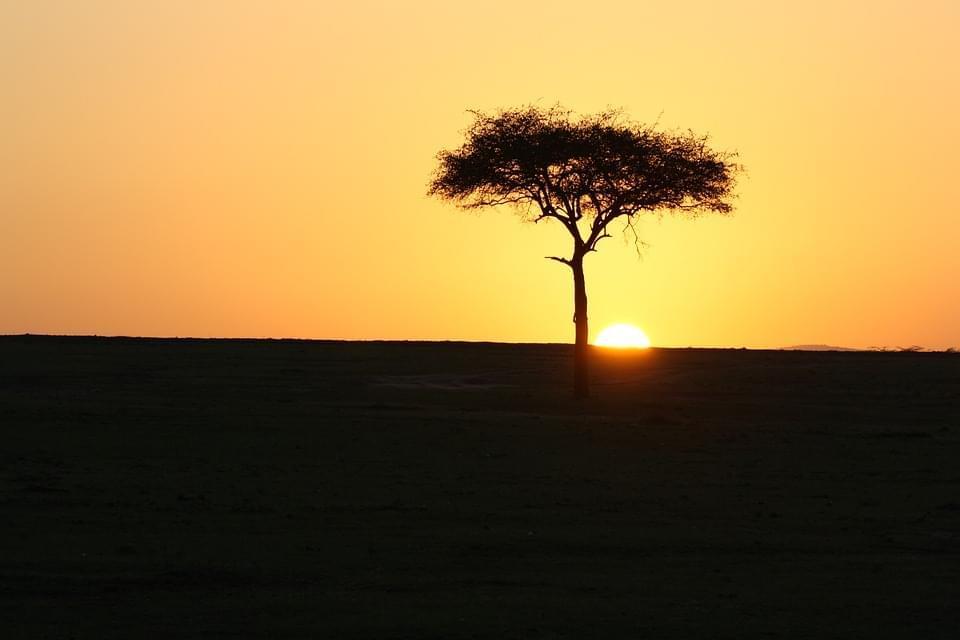
The park was created in 1961 and covers an area of 1,510 square kilometres made up of hilly pastures and forests. It is practically a savannah, with many acacia trees along the south-eastern area and the Mara and Telek rivers that flow through the reserve's plains.
How to get there
From Milan: there is a one-hour and 15-minute stopover at Doha International Airport. You then depart for Nairobi Airport. Total duration about 13 hours - Compare flights from Milan - from €405.44
From Rome: there's a 3-hour stopover at Roissy-Charles de Gaulle in Paris, from here it's a flight to Nairobi. Total duration 13 and a half hours - Compare flights from Rome - from €419.37
From themain European capitals: from Paris direct flight to Nairobi with Air France (duration approx. 9 hours). From London direct flight of 8 - 9 hours with British Airways. From Berlin there is a 1 hour 15 minute stopover in Frankfurt with Lufthansa.
Compare flights to Masai Mara - from €375.58
How to get to the Masai Mara
To get to the Masai Mara there is an internal flight from Nairobi's Wilson Airport to the park, served by Mara Serena Airport, Musiara Airport and Keekorok Airport. Alternatively, one can choose a car, as the Masai Mara is 300 km from the capital, but it takes at least six hours due to poor road conditions.
When to go? Info on climate and best time
Month | Average temperatures (min/max) | Precipitation (days/mm) |
|---|---|---|
January | 12 / 28° | 15 days / 465 mm |
February | 12 / 28° | 17 days / 425 mm |
March | 12 / 27° | 20 days / 285 mm |
April | 13 / 26° | 23 days / 140 mm |
May | 13 / 25° | 20 days / 60 mm |
June | 12 / 25° | 12 days / 50 mm |
July | 11 / 25° | 11 days / 35 mm |
August | 11 / 25° | 12 days / 40 mm |
September | 12 / 27° | 12 days / 40 mm |
October | 12 / 28° | 14 days / 95 mm |
November | 12 / 27° | 20 days / 390 mm |
December | 12 / 27° | 17 days / 360 mm |
Climate: pleasantly warm. Slightly higher temperatures from October to March, slightly cooler from June to August. There are no completely dry periods, but the wettest month is April, the driest July. Temperatures average between 25 and 28 degrees throughout the year, lows around 12 °C.
Best period: June to September, being the coolest and driest, July to October for the wildebeest migration. Alternatively, January and February, another relatively dry season. In general, animals can be seen from July to October, with a higher probability in August and September.
Period to avoid: March/May and to a lesser extent October/December, as these are rainy seasons.
Tips: Once you arrive at your camp/lodge, you can choose whether to go on a half-day or full-day safari, so study well the area in which you plan to stay: if you need an hour or more to reach the most densely populated animal territories, it is better to opt to stay out the whole day, while if you are close you can also do a half-day safari. Finally, it is very important to have a guide/driver who knows the park well and will certainly give you an unforgettable time!
What to bring: recommended clothing and equipment
Clothing: clothes in colours close to those of nature, such as khaki, brown, dark green, beige. Avoid bright colours as they might frighten the animals and always carry a hat to protect your head from the sun, sunscreen, sunglasses. During the day wear a T-shirt, Bermuda shorts, closed-toe shoes, and in the evening a k-way and light sweatshirt. Don't forget a light mackintosh or umbrella for rainy periods.
Equipment: travel light and prefer soft bags, duffels and backpacks to hard suitcases. Take a good camera with you, with a powerful zoom lens, binoculars, repellent, plenty of water, tea or juice and some energy snacks in case it gets too hot.
10 things to see in the Masai Mara

Big Five: lions, leopards, rhinos, elephants and buffaloes live in the Masai Mara Park and can be spotted. You have to be lucky as the reserve is very large, but here it is easier to get close thanks to the many trails.
Migration of the wildebeest, zebras and antelopes: before the arrival of the rains in October and November, you can witness the great migration of wildebeest, zebras and antelopes, which transforms the grasslands into a sea of horns, tails, humps and manes all the way to the horizon. Spectacle not to be missed!
Nile crocodiles: Nile crocodiles, large aquatic reptiles that can reach six metres in length, can be spotted in the Telek and Mara rivers. They live an average of 70 to 100 years and have the bad reputation of being man-eaters!
Mara River: the river is the protagonist of migrations, when animals move between the Masai Mara and the Serengeti. It is also home to hippos, crocodiles and several species of birds.
Predators: with a good dose of luck, one can see leopards, spotted hyenas, cheetahs, hooded and striped jackals, leopard, caracals, and wild dogs (difficult to spot because they are almost extinct).
Birds: for birdwatchers, this is the place to be! There are 570 species of birds including ostriches, guinea fowl, turacos, kingfishers, grey crowned cranes, bustards, storks. The best time to observe them is from November to April, when the species migrating here from Europe are present.
Raptors: there are 57 species of birds of prey, such as vultures, marabou storks, snakes, augur buzzards, pygmy falcons, eagles of different species and owls, along with other nocturnal birds of prey.
Wildebeest cubs: January and February see the births of the cubs of many species of herbivores, in particular the wildebeest cubs. A very exciting spectacle indeed!
Maasai villages: the villages have a precise structure, with an enclosure of thorny bushes and logs to protect the inhabitants from predator attacks. In the middle, another smaller thorny enclosure where the precious animals are brought at night and, around this, the circular huts made of mud and straw.
Masai Mara from a hot-air balloon: one of the typical excursions is to take a hot-air balloon safari, thus being able to see the Masai Mara from above. Plains, rivers, animals and the Serengeti National Park in Tanzania are all things you can see from aboard a hot-air balloon.
Excursions and guided tours in the Masai Mara
How much does a Safari in the Masai Mara cost? Prices, offers and tips
 First of all, it must be said that safaris start from a minimum of two days and usually last a week. Furthermore, the Masai Mara Park is more expensive than others, mainly because of the airline flights to get there, which cost at least €400.
Based on these assumptions, the price of the safari starts at around €700.00 and reaches approximately €3,000.00 per week.
Obviously, the type of accommodation, the services required and the means of transport have a great influence. For example, lodges can have average standards (costing around €100.00 per day) or high ones with costs of around €500.00 per night. Camps cost much less but sometimes hide pitfalls such as theft, few services, possible night raids by dangerous animals.
Admission to the park costs about $80.00 per day, while food prices range from €20.00 to €25.00.
One of the most beautiful excursions is certainly the hot-air balloon safari, which costs about $400.00 per person.
There are interesting flight+hotel packages that start at around €2,000.00 per person, taking into account 'comfort tent' accommodation.
Travelling informed: useful info
Inhabitants: 48.46 million
Capital: Nairobi
Languages: Swahili and English
Local currency: Kenyan Shilling (Ksh or Kes) / Exchange rate: €1.00 = 118.14 Kes; 1 Kes = €0.0085
Climate: There are three types of climate in Kenya, namely hot and humid along the coast (averages 26/27°C), temperate in the west and south-west where there are mountains, parks and plateaus (averages 24/25°C); torrid in the north with average temperatures of 27 degrees
Vaccinations: there are no compulsory vaccinations, but yellow fever, hepatitis A, hepatitis B, malaria, typhoid and especially malaria prophylaxis are recommended
Entry requirements: you must have a passport with a residual validity of at least six months and a tourist visa. The stay is limited to three months
Distance from Italy: about 10,000 km from Milan (11-13 hours flight time)