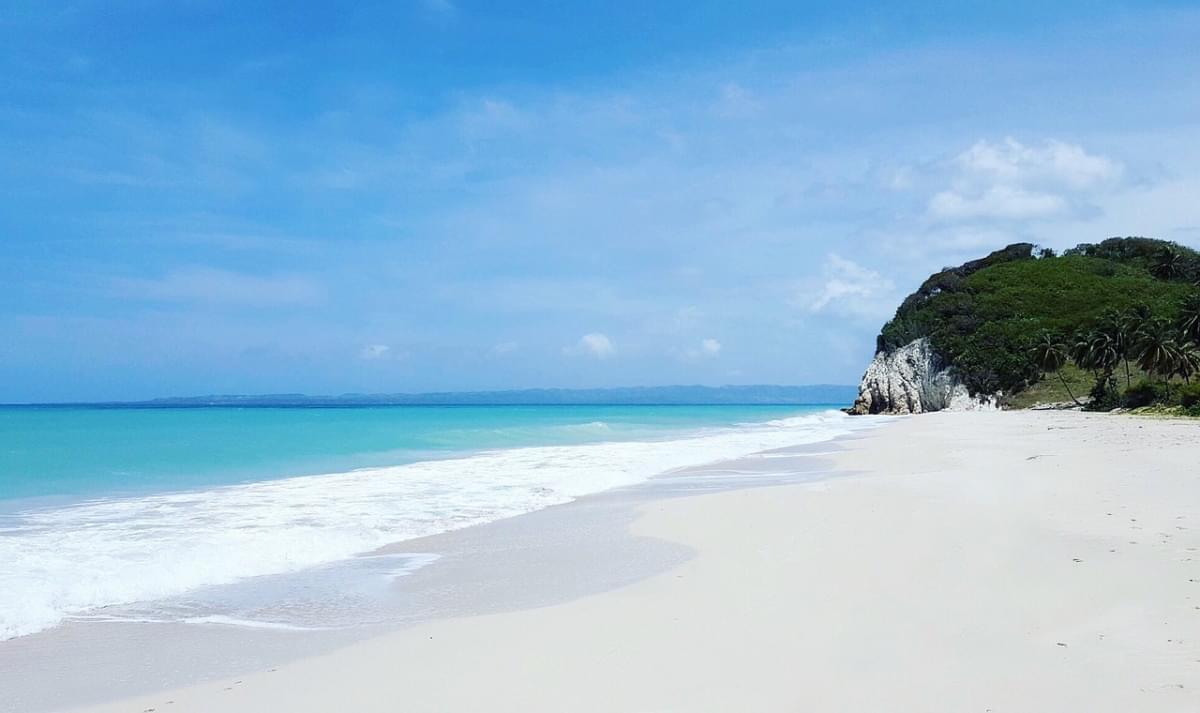
 A Caribbean country that shares the island of Hispaniola with the Dominican Republic, Haiti, despite suffering a major earthquake in 2010, has managed to preserve much of its historical heritage dating back to the 19th century. Certainly less touristy than its neighbour, this country is the land of contrasts due to rampant poverty. Nevertheless, it has a very interesting cultural and historical heritage made up of art and voodoo rituals, but it also has paradisiacal beaches lapped by crystal-clear waters.
So let's find out everything you need to know about planning a trip to Haiti: where it is, when to go and what to see!
Travelling informed: useful info
Inhabitants: 9,900,000
Capital: Port-au-Prince
Languages: French, Creole, English
Local currency: Haitian gourde (HTG) / €1.00 = 131.90 HTG
Climate: humid tropical with two seasons, a less hot one from November to March with an average temperature of between 22° and 26°, and a more sultry one from April to October with average temperatures of around 30°
Time zone: GMT-5 (-6h compared to Italy; -7h when daylight saving time applies)
Vaccinations: vaccination against fever for travellers coming from countries at risk of transmitting the disease. Anti-typho and anti-cholera vaccination strongly recommended
Entry requirements: passport with residual validity of 6 months; compulsory visa issued at the airport on entry into the country, cost €10.00. Travel insurance strongly recommended
Distance from Italy: 8,187 km (29 h flight with several stopovers) from Rome to Port-au-Prince
Safety info: Haiti is often affected by environmental disasters (hurricanes). Before leaving and during your trip keep up to date on the official Farnesina website section Haiti
Where it is located
Haiti occupies the western part of the island Hispaniona, is part of the Greater Antilles and lies east of Cuba. It is bordered to the east by the Dominican Republic, to the north by the North Atlantic Ocean and to the south by the Caribbean Sea.
How to get there
From Milan or Rome: Haiti is served by Toussaint Louverture International Airport in Port au Prince. From Italy there are no direct connections. BritishAirways in partnership with American Airlines operates connections with stopovers in London and Miami. Iberia' and American Airlines connect Rome or Milan to Haiti with stopovers in Madrid, New York and Miami. Average journey time 30 h, cost from €900.00 - Compare flights from Rome or Milan
From major European capitals: there are no direct flights. The best European connections to Haiti are from London with American airlines, with a stopover in Miami, on average 14 h; and from Madrid with Iberia and American Airlines, with stopovers in New York and Miami, on average 24 h - Compare flights to Haiti
When to go? Info on climate and best time
Month | Average temperatures (min/max) | Precipitation (days/mm) |
|---|---|---|
January | 20 / 31° | 3 days / 30 mm |
February | 20 / 31° | 5 days / 35 mm |
March | 21 / 32° | 7 days / 75 mm |
April | 22 / 32° | 11 days / 155 mm |
May | 22 / 32° | 13 days / 190 mm |
June | 23 / 33° | 8 days / 110 mm |
July | 23 / 34° | 7 days / 65 mm |
August | 23 / 34° | 11 days / 135 mm |
September | 23 / 33° | 12 days / 165 mm |
October | 22 / 32° | 12 days / 160 mm |
November | 22 / 31° | 7 days / 80 mm |
December | 21 / 31° | 3 days / 45 mm |
Climate: tropical, warm all year round, with a dry season from December to February and a rainy season from April to October. The sea is warm all year round.
Best period: December to March, dry season and milder temperatures
Period to avoid: June to November, with a higher probability between August and October, Haiti can be crossed by hurricanes, which are dangerous and sometimes destructive
Tips: pack light clothes, a sweatshirt for the evenings, and for those wishing to go trekking in the mountains, a jacket and sneakers. For the sea, snorkelling equipment, swimming costumes, sun cream and headgear to protect from the sun
What to see and do: beaches and places of interest
Port au Prince: a noisy and bustling city founded in 1770 by the French. Don't miss the Fer.Mupanah Market, a bright structure with Asian influences, and the Musèèe du Pantheon National, with various artefacts such as the anchor from Columbus' ship Santa Maria
Citadelle Laferriere: a testimony to the pages of history when slavery rebelled against French rule; this fortress overlooking the jungle was equipped with 365 cannons and today is a Unesco World Heritage Site within walking distance of the town of Milot
Jacmel: a beautiful port city on the south coast of Haiti, it is the capital of handicrafts, offers some beautiful beaches and is famous for a famous carnival held here in February
Bassin Bleu: a beautiful place in nature with waterfalls, caves and lakes, not far from Jacmel. It is ideal to organise walks or horse riding
Labadie Island: one of the main tourist attractions in Haiti, famous for its coral reef that attracts snorkelling and diving enthusiasts. The ideal thing to do is to take a cruise that allows you to discover the entire coastline.
Amiga Island: an attraction not to be missed, characterised by clear waters and seabed ideal for snorkelling thanks to the presence of incredible underwater life
Plaine du Cul de Sac: perfect territory if you want to walk among herons, flamingos and ducks. Close to the border with the Dominican Republic, ideal for nature lovers
Pic Macaya National Park: comprises two hills, cut by deep gorges that give rise to large rivers and culminates at 2,347 m at the top of Macaya Peak. Characterised by lush vegetation, it is home to 65 species of birds, some of them endemic
Barbancourt Rum Distillery: a must-visit for rum enthusiasts, a place to learn the secrets of this exquisite alcoholic beverage. At the end of the tour there are tastings
Sans Souci Palace: former home of King Henri Christophe, with architecture that, during its era, rivalled the splendid European palaces in terms of beauty. 15 km from Cap-Haïtien, in the small town of Milot
How much does a holiday in Haiti cost? Prices, offers and advice
Haiti is a country with few tourists, so there are not many accommodation facilities and most of them are modest inns or colonial hotels. The areas most frequented by tourists are Port-au-Prince and Pétionvill Cap-Haïtien, Les Cayes and the Gonâve Bay area; and the cost for one night is around 3,280.00 HTG (€24.80) and 3,940.00 HTG (€29.80)
In terms of food, there are various opportunities from stalls offering typical street food, fruit and drinks to seafront restaurants serving fresh fish. The costs are moderate, averaging from 400.00 HTG (€3.00) to 1,970.00 HTG (€14.90).
As far as transport is concerned, car hire is not recommended because the roads are bad and the directions are completely lacking! It is therefore preferable to rely on rental with driver or taxis which are rather cheap, averaging 1,310.00 HTG (€9.90) per 50 km.
SEE ALSO: When to go to the Caribbean: climate, best time and months to avoid
Where to stay: Hotels and B&Bs from €25.00 per room
Cheap flights: to Port au Prince from €870.00 - see deals