 Do you love typical Northern European landscapes but not the classic destinations? Here is a destination that is just right for you! If you also love birdwatching and nature, then even better! The Faroe Islands are an archipelago off the Atlantic Ocean and the Norwegian Sea, touristy at the right point but well organised to welcome you and facilitate your discovery of its territory, which undoubtedly has a lot to offer.
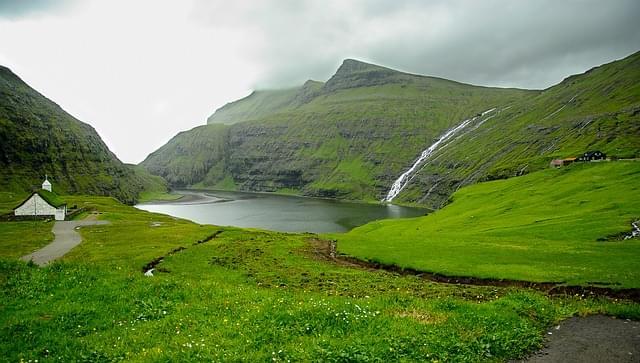
These are volcanic islands of unspoilt nature, characterised by rocks and cliffs intertwined with lakes, rivers and waterfalls. There is no shortage of vast expanses of green meadows on which you will come across small colourful villages and the remains of abandoned villages, but above all several colonies of typical northern birds such as puffins. Find out with us where they are, when to go and what to see!
Informed travel: useful info
Inhabitants: 49188
Capital: Tòrshavn
Languages: Faroese and Danish
Local currency: Danish Krone (€1.00=7.47DKK)
Climate: continental climate, average temperatures 2 - 11 °C
Vaccinations: no vaccination required
Entry requirements: passport or ID card valid for travel abroad required
Distance from Italy: 2576 km (5 - 7 hours flight time)
Where to find them
The Faroe Islands are a subarctic archipelago located between the Norwegian Sea and the Atlantic Ocean. Their territory is a constituent nation of the Kingdom of Denmark but politically they are an autonomous government.
How to get there
FromMilan or Rome: there are no direct flights to the Faroe Islands from Italy. You must always make at least one stopover, usually in Amsterdam or Copenhagen, flying with Atlantic Airways or SAS airlines. The archipelago's main airport is located in the Vàgar region, and can be reached by a journey lasting about 7 hours in total (including stopovers). Flights from Rome from €249.00 - Flights from Milan from €247.00
From themain Europeancapitals: leaving from a European city can definitely decrease the travelling time, in fact, direct flights to the Faroe Islands depart daily from Copenhagen, London, Amsterdam and Oslo, always with the airlines Atlantic Airways and SAS.
When to go? Info on climate and best time
Month | Average temperatures (min/max) | Precipitation (days/mm) |
|---|---|---|
January | 2 / 6° | 22 days / 160 mm |
February | 1 / 6° | 17 days / 115 mm |
March | 2 / 6° | 21 days / 130 mm |
April | 3 / 7° | 16 days / 90 mm |
May | 5 / 9° | 13 days / 65 mm |
June | 7 / 11° | 12 days / 55 mm |
July | 9 / 13° | 13 days / 75 mm |
August | 9 / 13° | 13 days / 95 mm |
September | 8 / 12° | 18 days / 120 mm |
October | 5 / 9° | 22 days / 145 mm |
November | 3 / 7° | 21 days / 140 mm |
December | 2 / 6° | 22 days / 135 mm |
Climate: humid and windy continental, characterised throughout the year by frequent rainfall and low temperatures. The maximum temperature that can be reached is in fact only 13 °C, while the sea temperature remains between 6 and 11 °C
Best period: June to August when temperatures are slightly higher and rainfall less frequent
Period toavoid: from October to March because of the heavy rain accompanied by wind and very low temperatures
Tips: at any time of year, cover yourself well and don't forget jumpers, thermal underwear, a waterproof jacket, an umbrella and various accessories such as a hat and gloves.
Which island to go to?
The Faroe Islands archipelago consists of 18 islands. Here are the 3 islands that we recommend you don't miss:
Streymoy: it is the largest of the archipelago and on it is located the capital Tòrshavn. This island is consequently the most inhabited and visited by tourists and for this reason it is also the richest in transport, connections and various tourist services such as rentals, excursion agencies and so on.
Borðoyis located further north than the previous one and is another large island. Reaching it is easy thanks to the many bridges that connect the Faroe Islands to each other and also on Borðoy you will be fascinated by its landscapes and old, abandoned villages.
Fugloy: is the northernmost island of all and can be reached by helicopter from Vágar airport. This island has only 45 inhabitants who are always very welcoming to tourists, but the real reason why you should visit is the sheer number of birds in its territory, especially the cute puffins.
Things to see and do: sights and attractions
Vágar is the first place you'll land, but it's not just the island where the airport is located; you should spend a couple of days exploring its fjords and discovering its mountains, lakes and waterfalls.
Sørvágsvatn is a lake, the largest in the Faroe Islands, in the northern part of the island of Vágar. Its uniqueness lies in the fact that it seems to be suspended in the air due to its location on the edge of a very high cliff.
Bøsdalafossur is a 30-metre high and very wide waterfall, which starts at Lake Sørvágsvatn and runs along the huge cliff to the Atlantic Ocean
Múlafossur Water fall is another long waterfall on the island of Vágar that ends in a small inlet on the coast, recreating beautiful visual effects
Mykines is a small village of just 14 inhabitants, consisting of a few brightly coloured houses and surrounded by unspoilt nature, located on the westernmost island of the archipelago from which the village takes its name
Slættaratindur is the highest mountain in the archipelago at 880 metres high, from the top of which the glaciers of Iceland can be seen. It is located on the island of Eysturoy and its name means 'flat top'.
Koltur is a village in the middle of nowhere on the island of the same name. It is made up of a few small houses with roofs covered in vegetation, and was in fact abandoned in the 1980s by the few shepherds and farmers who lived there exclusively on livestock and agriculture. In 2016, only one person still lived there in addition to a large number of puffins and black guillemots.
Tindhólmur is an uninhabited island near the island of Vágar, consisting only of sheer cliffs and high, pointed rocks
Cape Enniberg is a square-shaped promontory on the island of Viðoy, the northernmost island of the archipelago. Cape Enniberg is in fact the northernmost point of the island to which it belongs and of the entire Faroe Islands complex.
Trælanípa is a 142 metre high mountain on the island of Vagàr on which to climb and enjoy the view of the lakes and greenery all around
How much does a holiday in the Faroe Islands cost? Prices, offers and tips
 Travelling to the Faroe Islands, contrary to what one might think, is not too expensive, but not entirely cheap either. Some services have incredibly normal prices, such as a full meal in a restaurant, depending on the type, costs between €10.00 and €20.00. Transfers do not cost much either, such as the transfer from the airport to the city, which for only €13.50 includes the bus and the ferry crossing.
Accommodation, on the other hand, is not exactly average and a standard room without meals starts at €50.00 per night, although the most expensive part of the trip turns out to be the car rental at €80.00 per day. However, a good way to save money is to choose a flight+hotel package to which you can often add excursions including transfers or car rental. This type of package, for a week in high season with a standard room and breakfast, costs around €900.00, to which only lunches and dinners have to be added, which, as we have already seen, have good prices.
Where to stay: Hotels and B&Bs from €67.00 per room - see offers
Low cost flights: from €244.00 - look at the offers