
Sambuyeon Falls: According to local legend, the powerful Sambuyeon Falls in the Gangwon Province were believed to be the dwelling place of a majestic dragon. This magnificent 20-meter-high waterfall is renowned for its beauty and strength, captivating all who visit. The nearby village of Yonghwadong is named after the dragon, as its name begins with the character symbolizing this legendary creature.

The Namhansanseong Fortress: Situated on Mt. Namhan in Gyeonggi Province, this astonishing earthen fortress, stretching for around 12 kilometers, dates back 2,000 years but was reconstructed in 1621. Its remarkable hiking trails make it a favored destination for day trips.

Experience the Rich History of Sareung: Unveiling the captivating tales of the Joseon Dynasty, Sareung stands as a jewel in South Korea's cultural heritage. Nestled in Gyeonggi Province, this UNESCO World Heritage site holds the sacred royal tomb of Queen Jeongsun (1440-1521).
Embark on a Journey of Discovery: While access to the tomb area is limited to academic researchers and those seeking educational or religious purposes, the opportunity to immerse oneself in the rich history and architectural brilliance of Sareung is a truly extraordinary experience.

Seonjeongneung: This UNESCO World Heritage Site comprises royal tombs of Joseon's ninth King Seongjong, his queen Jeonghyeon and son, King Jungjon. Located in Gangnam, Seoul, the tombs are open to visitors daily (excluding Mondays) for less than $1.

Gobungun, Changyeong —
Gobungun, Changyeong: These ancient burial sites were constructed during the 5th and 6th centuries. Positioned in South Gyeongsang Province, there are about 180 tombs in this region that are conveniently located near major roads and easily accessible for visitors.

The stunning Anapji Pond, located in North Gyeongsang Province, was created in 674 AD during the Silla Dynasty. Originally situated within a fortress, the pond's circular shape adds to its allure. Unfortunately, the fortress was destroyed at a later point in time.

Exploring Gyeongbokgung's Throne Room
An Engaging Look At Geunjeongjeon, Gyeongbokgung Palace: This grand hall, known as Geunjeongjeon, housed in the esteemed Gyeongbokgung Palace located in the Jongno-gu district of Seoul, has traditionally played host to critical state matters. It notably served as venue for the much-anticipated celebration of the ceremonious restitution of Korean royal texts nearly a century and a half after they were plundered by French forces.

One of the must-visit palaces in South Korea is Changgyeonggung, a historical site built in 1483 by King Sejong to serve as a residential palace for the queens and concubines of the Joseon Dynasty. With its rich history and intricate architecture, Changyeonggung provides a glimpse into the royal life during that era.
This stunning palace is not the only attraction in Seoul, as admission tickets for Changgyeonggung also grant access to four other palaces in the city: Deoksugung, Gyeongbokgung, Changdeokgung, and the Jongmyo shrine. This ticket offers visitors an opportunity to explore a variety of palaces and experience the grandeur of ancient Korean culture.

Inwangsan: Located on the outskirts of Seoul, Inwangsan is a magnificent 338-meter-high mountain that offers unparalleled views of the city. It showcases iconic landmarks such as the palaces, N Seoul tower, and the Blue House, which serves as the residence of the Korean president.
Renowned for its extensive network of hiking trails, Inwangsan also boasts numerous castles that were strategically built to safeguard the city against potential foreign invasions. Exploring these historical fortifications provides a glimpse into the nation's rich heritage and its commitment to preserving its cultural treasures.

The Jongmyo Shrine, built by Lee Seong Gye, the first king of the Joseon Dynasty, is a historical site in Jongno-gu, Seoul. This revered shrine served as a place of worship and memorial services for the kings. Every year on the first Sunday of May, visitors have the opportunity to witness a special reenactment of a memorial service, featuring music and dance performances from five centuries ago.
For those interested in South Korea's rich cultural heritage, a visit to Jongmyo Shrine is a must. Exploring the tranquil grounds and experiencing the immersive reenactment offers a unique glimpse into ancient traditions and the important role they played in the country's history.

The Gochang Dolmen site, also known as the Stonehenge of Korea, is a UNESCO World Heritage Site that features over 400 dolmen. These dolmen are stone graves that were built during the prehistoric era. Visitors to the site can explore and learn about these ancient structures at the dolmen museum located on the premises.

Wanggungri —
Wanggungri: The five-story pagoda at Wanggungri in Iksan, North Jeolla Province, is an iconic example of the refined architecture of the Baekje Period (18 BCE-660 CE).

Discover the magnificence of Seoul Seonggwak Fortress Wall, an 18.2-kilometer-long stone barrier that originated during the illustrious Joseon Dynasty, serving as a protective shield for the capital city. This extraordinary landmark invites visitors to embark on a breathtaking walking tour, unveiling a plethora of intriguing attractions along the way. From the vibrant Dongdaemun district, renowned for its late-night trendy shopping centers, to the majestic Naksan Mountain, the journey culminates at Ehwajang, the former residence of Syngman Rhee, Korea's inaugural president. To fully immerse yourself in the historic charm and vibrant culture of Seoul while exploring Seonggwak Fortress Wall, consider staying at one of the many hotels in Seoul. These accommodations offer a comfortable respite after a long day of sightseeing and walking, ensuring you have the energy to continue discovering the city's hidden gems the next day.
Immerse yourself in history and witness the grandeur of this well-preserved stone wall as you traverse its entirety. Each step offers a glimpse into the bygone era, with the wall's remarkable architecture standing as a testament to the cultural heritage of South Korea. Experience the fusion of past and present as you stroll along this scenic pathway.

Gangneung Anbandeok-gil - Experience the charm of Gangneung, a top destination in South Korea that attracts domestic tourists throughout the year. Located in Gangwon Province, Gangneung is renowned for its breathtaking mountains, beautiful beaches, as well as its cultural landmarks such as a Confucian school and museums.
With its convenient three-hour express bus ride away from Seoul, Gangneung offers a perfect getaway for those seeking natural beauty and cultural experiences. Explore the stunning landscapes and immerse yourself in the rich history and traditions of this captivating city.

Soyang Lake, also known as the "sea on land," is a mesmerizing attraction located in Gangwon Province, South Korea. This beautiful lake owes its existence to Soyang Dam, which holds the title of Asia's largest rock-fill dam.
A popular destination for ice-fishing and a serene escape from the bustling city life, Soyang Lake offers visitors a tranquil experience. Its exquisite scenery, surrounded by the picturesque Gangwon Province, provides a perfect backdrop for nature enthusiasts and relaxation seekers.
Plan your visit to Soyang Lake and immerse yourself in the peaceful ambiance of this remarkable South Korean gem.

Upo Wetlands —
Upo Wetlands: The Upo Wetlands are home to more than 1,000 species and span 5,550 square kilometers. The wetlands have been protected since 1998. It's best to visit in the morning or early evening to catch the prettiest views of rain, fog and fireflies.

Experience the natural beauty of South Korea at Hapcheon daraknon. This stunning destination in South Gyeongsang Province boasts awe-inspiring terraced rice paddy fields that will leave you captivated.
Known as "daraknon" in North Korea, these thin and long terraced rice paddies are a testament to the rich agricultural heritage of the region. The term may have its origins in the North, but it is still widely used and embraced in the South.
Immerse yourself in the picturesque landscapes of Hapcheon daraknon and witness the intricate patterns created by the terraced fields. Take a stroll along the winding pathways, breathe in the fresh air, and bask in the tranquility of this serene location.
With every step, you'll gain a deeper appreciation for the hard work and skill required to cultivate and maintain these remarkable rice paddies. As you explore, don't forget to capture the essence of Hapcheon daraknon through your lens, preserving the memories of this unique destination.
Embark on a journey to Hapcheon daraknon and discover the beauty of South Korea's countryside. It's a destination that seamlessly blends tradition, natural splendor, and cultural significance.

Buseoksa —
Buseoksa Temple: Step into the ancient world at Buseoksa Temple, where the 108 steps between Cheonwang gate and Anyang gate symbolize the journey towards redemption from agony and evil. Dating back to 676 during the Silla Dynasty, this remarkable temple is the oldest surviving wooden structure in Korea. Immerse yourself in its rich history and witness the charm of the temple bell, which resonates 33 times every evening at 6 p.m., instilling a sense of tranquility in the surroundings.
Discover the cultural legacy of North Gyeongsang Province as you explore Buseoksa Temple. Stand in awe of the majestic architecture, marvel at the intricate details carved into the wood, and experience a serene atmosphere that has withstood the test of time. If you're in search of a captivating journey through history, Buseoksa Temple is a must-visit destination in South Korea.

Discover the enchanting Geumsan Boriam Temple that holds a promise of answered prayers, as believed by the locals. Situated in North Gyeongsang Province, this temple presents an opportunity for visitors to engage in a special overnight program.

Dolsan Bridge —
Dolsan Bridge: The longest cable-stayed bridge in Korea has become a local tourist attraction in itself due to the dramatic way it's lit up at night. Located in South Jeolla Province, the bridge is perfect for evening walks.

Discover the enchanting Andong Hahoe Village, a captivating destination for travelers seeking a glimpse into Korea's rich cultural heritage. Situated in North Gyeongsang Province, this iconic folk village has served as a renowned hub for intellectuals and aristocrats of the Ryu family for centuries.
Notably, in 1999, Queen Elizabeth herself graced this historic site with her presence, further attesting to its allure. As you step foot into Andong Hahoe Village, you will have the unique opportunity to immerse yourself in the noble lifestyle of ancient Korea by experiencing a stay in an authentic traditional Korean house.

Ojakgyo —
Ojakgyo: Meaning "crow and magpie bridge," Ojakgyo in North Jeolla Province is the setting for Korea's most famous love story, in which a couple is forced to live on either side of the Milky Way, only to be reunited when magpies form a bridge.
If you tried to travel one island a day in South Korea, it would take you more than nine years to get to them all (there are 3,358 officially affirmed islands off the South Korean coast).
While most travelers in the region have most likely heard of Jeju, South Korea’s most famous island and one of the New 7 Wonders of Nature, the seas surrounding the Korean Peninsula are peppered with lesser-known destinations with spectacular views and awesome fishing.
For more information and directions to the islands, try searching for each island on the Visit Korea website, or calling Dasan Call Center (02-120) once you’re in the country.
1. Seonjaedo (선재도)
Many are familiar with Moses dividing the Red Sea, but this biblical story has its own, more scientifically plausible version on Seonjaedo.
At low tide, the ocean parts to reveal a sandy path from Seonjaedo to the smaller satellite island of Mok. Who knew the city of Incheon, best known for its airport, had such a patch of natural beauty?
2. Sinuido: A Salt Lover's Paradise
Sinuido, also known as 상하태도, is a hidden gem that will mesmerize any visitor. Featured on the KBS2 channel's travel program "1 night 2 days", this island is not your typical tourist spot.
Forget about fishing, hiking, or swimming - the main attraction here is the astonishing salterns, where Sinuido proudly holds the title of South Korea's largest producer of sea salt. As you wander through the island, you'll be captivated by the surreal mounds of salt, patiently awaiting their harvest.
But that's not all! Immerse yourself in the local culture by learning about the age-old salt-making techniques from the friendly islanders. Take a leisurely stroll along the pristine coastline and breathe in the refreshing sea breeze. Don't forget to capture the stunning panoramic views to make your trip unforgettable.
3. Hongdo (홍도)
Experience the breathtaking beauty of Hongdo, a small island in South Korea that is known for its stunning sunrises and unique rock formations. With just 6.47 square kilometers of land, Hongdo resembles a delicate flower gracefully floating on the tranquil waters.
As the name suggests, Hongdo is named after the vibrant crimson hue that bathes the entire island during sunset, creating a truly mystical atmosphere. Apart from its stunning scenery, Hongdo is also home to a diverse ecosystem, boasting approximately 270 subspecies of evergreen plants and around 170 different animal species.
For avid nature lovers and photography enthusiasts, a visit to Hongdo promises mesmerizing views and an opportunity to witness the rich biodiversity found on this enchanting island.
4. Explore the Enchanting Island of Cheongsando
Discover the mesmerizing allure of Cheongsando, an island rich in biodiversity and breathtaking landscapes. This serene haven has witnessed numerous clashes over its possession, showcasing its undeniable allure.
Embark on an unforgettable adventure as you immerse yourself in the abundant marine life, from the graceful turtledoves to the captivating black coral. With pristine surroundings and crystal-clear waters, Cheongsando offers an ideal setting for indulging in the art of fishing. Delight your taste buds with local delicacies like abalone porridge and fresh hoe, elevating your culinary experience to new heights.
5. Ulleungdo
This popular vacation destination is the major fishery of the eastern coast – that is, even more so than all the other coastal fishing villages along South Korea’s peninsular shoreline. This, as we know by now, translates into good seafood. Ulleungdo’s signature catch is the cuttlefish.
Otherwise the island is packed with dazzling little nooks – caves, waterfalls, seaside walks and ancient trees – all very well-equipped for visitors.
6. Discover the Natural Beauty of Deokjeokdo Island
Escape to the enchanting island of Deokjeokdo, where the perfect combination of lush forests, majestic mountains, and breathtaking shores awaits.
Located near Incheon, this hidden gem boasts a mesmerizing landscape of mud flats, pebbled beaches, and ancient pine trees that have stood the test of time for over 300 years. Despite being situated in the north, Deokjeokdo effortlessly competes against its more famous counterparts in the south when it comes to sheer beauty and charm.
Immerse yourself in the tranquility of Deokjeokdo's pristine nature, taking leisurely strolls along the serene shoreline, marveling at the harmonious blend of land and sea. Explore the island's well-preserved forests, admire the unique wildlife, and uncover the rich history that runs deep within the 300-year-old pines.
7. Uido (우이도)
South Korea has an intriguing island called Uido, which gets its name from the resemblance it bears to a cow's ear. Located in the Yellow Sea, Uido offers picturesque beaches for swimming and fishing, as well as a renowned sand dune.
With its unique features, Uido stands out as a hidden gem among South Korea's many beautiful islands. The island's distinct charm lies not only in its scenic coastline but also in its tranquil atmosphere, making it an ideal destination for nature lovers and those seeking a serene escape.
8. Ganghwado (강화도)
As the fifth largest island in South Korea, Ganghwado, accessible via a short drive over a bridge, doesn’t really feel like an island.
Its main attractions are its many mountains, rather than its beaches – the tallest and most popular being 468-meter Mount Mani.
Not to say there aren’t other activities: You can check out the 120-odd dolmen at the foot of Mount Goryeo, which date back to the Bronze Age, or roll around in the mud flats.
9. Wando (완도)
The “Wan” in Wando means “to smile broadly.”
Easily done on Wando – from hiking to the top of 644-meter Sanghwang Peak (or any of its lesser neighboring peaks) to fishing. The island, from beach to peak, is bustling and wonderfully scenic.
Most beautiful places to visit in South Korea
10. Jukdo (죽도)
Living on Jukdo, with its lack of a water source and limited access, may be challenging and solitary. The island's water supply relies on rainwater and water from neighboring Ulleungdo, and reaching the island requires climbing a spiral staircase of 365 steps. However, Jukdo's allure lies in its peaceful seclusion, attracting a population of only two people.
Despite its remote nature, Jukdo offers a unique experience for adventurous travelers seeking tranquility. Shrouded in serenity, this island invites visitors to disconnect from the hustle and bustle of modern life. With its mesmerizing natural beauty and sparse population, Jukdo guarantees a peaceful retreat like no other.
11. Geojedo (거제도)
Geojedo, the second largest island in South Korea, is a hidden gem in the country's tourist industry. Unlike more popular destinations, Geojedo offers visitors a remarkably clean and well-preserved experience.
One of the island's representative attractions is "The Hill of the Wind," a picturesque grassy green hill located by the sea. Additionally, visitors can explore Hakdong Black Pearl Mongdol Beach, known for its unique composition of round, black pebbles that create a mesmerizing sound when caressed by the waves.
Geojedo's prospering tourist industry, combined with its natural beauty and tourist spots, makes it an excellent choice for travelers seeking an off-the-beaten-track adventure in South Korea.
12. Oedo (외도)
Oedo, located just four kilometers from Geojedo, used to be an isolated and rugged island without access to electricity.
However, today it has transformed into a captivating botanical garden spanning over 132 square kilometers, boasting a stunning collection of more than 3,000 species of unique plants. This exquisite garden is adorned with beautiful Western-style buildings and sculptures, making it a favorite setting for K-Dramas and earning the name "paradise."
Visit Oedo to immerse yourself in the lush greenery and vibrant colors of its diverse flora. The island's exceptional beauty, once hidden in its remote past, is now a well-preserved gem waiting to be explored.
13. Somaemuldo (소매물도)
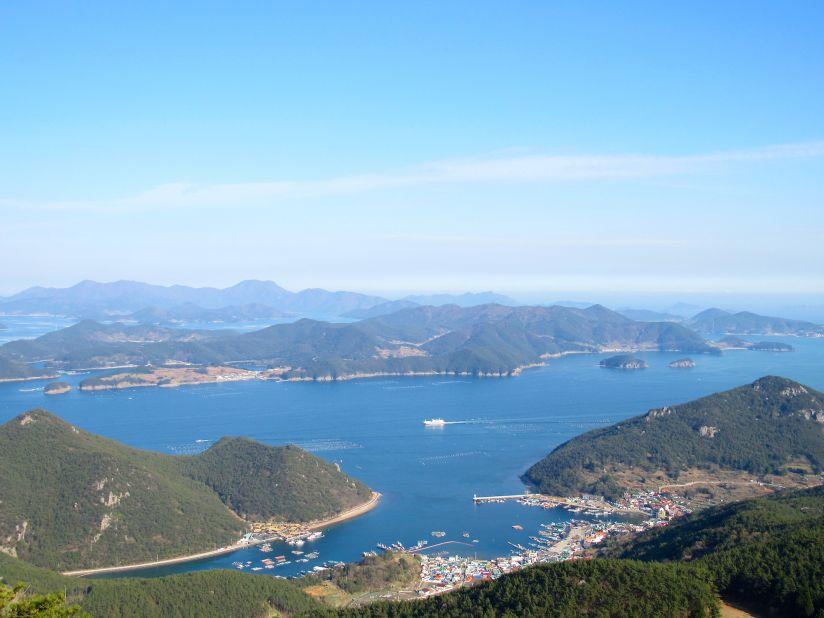
Behold Mireuksan Mountain —
A short, 10-minute journey via cable car immerses you in breathtaking panoramas of Tongyeong and Hallyeohaesang National Park from the peak of Mireuksan Mountain.

Lighthouse Island —
Somaemuldo Island can be reached by a ferry ride from Tongyeong, which takes approximately 1.5 hours. During low tide, visitors have the opportunity to walk across a 150-long path that connects Somaemuldo Island to its neighboring Deungdaeseom (Lighthouse) Island. This unique experience allows tourists to explore the beauty of both islands and enjoy the breathtaking sight of the lighthouse.

Experience the vibrant local cuisine at Donghae Sikdang, a popular restaurant in Tongyeong. Indulge in a variety of mouth-watering dishes, including meonggae (sea pineapple), bibimbap, and grilled fish. This spread showcases the flavors unique to the region and is sure to satisfy your taste buds.
The Artistic Legacy of Jeon Hyuck Lim —
The esteemed Tongyeong painter, Jeon Hyuck Lim (1916-2010) spent 30 years of his life at the residence which now shelters the museum exhibiting his creations.

Gangguan Port is a bustling hub that encompasses Tongyeong's traditional markets, dining establishments, and various stores.

As the sun sets in Tongyeong, a vibrant atmosphere takes over the city. The bustling fish markets and restaurants are abuzz with activity, getting ready for the upcoming dinner rush.

Dongpirang Village —
When this hillside working-class village was marked for demolition back in 2007, art students were commissioned to fill its alleys with beautiful wall murals -- making it too beautiful to tear down. It's since become hugely popular and is now packed with tourists on weekends.

The park, named after Admiral Yi Sun-sin, holds great admiration for this national hero who successfully led battles against the Japanese navy. Situated by the coast, visitors can enjoy splendid views from this park.

The enchanting beauty of Mireuksan can truly be appreciated during the mesmerizing sunsets that grace the island. As the sun dips below the horizon, casting a golden glow on the surrounding landscape, visitors flock to this serene destination.
Somaemuldo, nestled within the Hallyeo Hasesang (Maritime) National Park, owes its widespread allure not only to its own natural wonders but also to the presence of the charming Lighthouse Island just off its coast. This tiny island, lovingly referred to as "Deungdaeseom," seamlessly integrates into Somaemuldo's dazzling scenery.
Did you know that Somaemuldo's Lighthouse Island gained recognition for its appearance in an advertisement for "Couque D'asse," a delightful Korean biscuit snack? This association adds a touch of whimsy to the island's allure, making it even more enticing to explorers and wanderers worldwide.
14. Udo
Udo is an enchanting island in South Korea that offers a unique blend of natural beauty and cultural heritage. Situated in the Jeju Province, Udo is home to South Korea's only coral beach, known as Seobin Beach. This picturesque shoreline boasts crystal-clear waters and fine white sand, inviting visitors to relax and soak up the sun.
What sets Udo apart is its captivating black lava cliffs, creating a dramatic contrast against the azure sea. Standing proudly amidst this stunning landscape is a lighthouse, providing panoramic views of the surrounding countryside. It's a sight that truly takes your breath away.
Aside from its natural wonders, Udo is renowned for its haenyeo, also known as "sea women." These remarkable divers have upheld a longstanding tradition of courageously diving for abalone and shellfish, not only to sustain their own livelihoods but also to support their families. Their resilience and skill are a testament to the island's rich cultural heritage.
15. Seonyudo (선유도)
Seonyudo, named for its 100-meter mountain, Seonyu Peak, which supposedly resembles two gods playing Go (baduk) with each other, packs a lot of view.
Popular sights are the sunset, the three tiny uninhabited islands tucked into a cove literally a stone’s throw away, the autumn leaves of Weolyeong Peak, the sandbar shaped like a seagull, the beach in the moonlight, and Mangju Waterfull.
16. Bogildo: A Tranquil Retreat Immersed in Nature
Nestled amidst lush evergreen forests, Bogildo offers a serene escape and a fascinating glimpse into the life of Yun Seon-do, a renowned poet from the Joseon era.
Among the treasures associated with Yun Seon-do, Seyeonjeong stands out as a prominent attraction. This picturesque pavilion, delicately poised above a tranquil pond that he personally excavated, served as his creative sanctuary. The name of the pavilion, "Seyeonjeong," carries the profound symbolism of purifying one's soul from the worldly concerns.
With its pristine beauty and rich cultural heritage, a visit to Bogildo promises a harmonious blend of nature and history, inviting you to appreciate the poetic charm that Yun Seon-do cherished.
17. Gageodo (가거도)
Gageodo is famous for its beautiful, rocky seashores and insanely good fishing.
While in some ways it’s similar to the other islands along this coast, with the rocks and the fishing communities, the isolation is what sets Gageodo apart. Literally.
18. Geomundo (거문도)
Geomundo actually refers to three separate islands – Seodo, Dongdo and Godo – clustered tightly together in a ring, forming a lake-shaped bay in a quasi-enclosure.
The island was claimed by British sailors in 1885, but was almost immediately taken back by Admiral Jeong Yeochang. For treasure hunters: centuries-old coins and celadon have been discovered on the island.
Paradise found: 12 crowd-free Asia island escapes
19. Eocheongdo
Eocheongdo, aptly named "water mirror," derives its name from the crystal-clear sea that surrounds it. Situated further offshore, the island offers a tranquil oasis away from the bustling mainland.
In addition to its serene surroundings, Eocheongdo boasts a remarkable array of rare and diverse avian species, making it a must-visit destination for bird enthusiasts.
If you're in search of a peaceful retreat amidst stunning natural beauty and a haven for birdwatchers, Eocheongdo is an ideal island getaway.
20. Gwanmaedo (관매도)
Gwanmaedo, with three villages and 300 residents, is an attractive island of wide, white beaches and shallow, family-friendly waters bordered by dense forests of black pines, and ludicrous (but entertaining) legends.
For example, at the north of the island is the adjacent Bangado, upon which a small rock sits balanced precariously on a hill.
Eating Korea: 10 of South Korea's most delicious dishes
Supposedly the balancing rock is a masculine emblem where infertile women can go to pray for babies.
21. Baeknyeongdo (백령도)
A mere two kilometers below the 38th parallel, Baeknyeong Island is the further north you can get by island hopping in South Korea. But the place is more than just a strategic military point.
While some of its attractions (like enormous piles of shells from our early ancestors) aren’t as attractive as others (spotted seals plashing in protected habitats), there is a lot to pick from.
Such as Sagot Beach, where the hardness of the sand also makes the beach a great natural airstrip; Sagot Beach is only one of two such naturally occurring airstrips in the world (the other is in Naples, Italy), and served as a temporary runway for United Nations’ aircraft during the Korean War.
Today it’s just an awesome beach.
22. Dokdo
Dokdo (called Takeshima in Japan) is best known for its central role in a property dispute between Japan and South Korea that dates back to the 15th century.
Dokdo actually consists of multiple islands, with the two largest East Island (Dongdo) and West Island (Seodo) and 89 even smaller islands scattered around. And despite its heavily politicized reputation, it’s actually quite important ecologically, too.
Because of its delicate ecosystem, visits to Dokdo are still limited; tourists must fill out an application and reserve with a travel agency. Call the Ulleung-gundo Administration Office for more information at +82 54 790 6645, 6646.
23. Heuksando (흑산도)
Heuksando, “black mountain island,” is where classical scholars (sunbi) of antiquity were banished when they managed to displease the higher-ups. (Like 17th-century scholar Jeong Yak-jeong, who spent his exile here writing an important treatise on fish).
But it couldn’t have been that bad; Heuksando and its people supposedly so charmed these academics on time out that they were sorry to leave.
Maybe it was the local delicacy, fermented skate ray, said to taste great with a swig of makgeolli. You can taste it at any of the pubs crowding Heuksando’s relatively sizable port, Yerihang.
24. Discover the Enchanting Island of Jindo
Experience the allure of Jindo, an island that holds deep cultural significance in South Korea. Known as the birthplace of the legendary Jindo Arirang folk song, Jindo Island is a treasure trove of captivating stories and traditions.
Moreover, Jindo is renowned for its remarkable natural wonder - a yearly occurrence where the sea mysteriously parts, creating a mesmerizing 2.8-kilometer-long path between Jindo and its neighboring island, Modo. This awe-inspiring event, known as the "Jindo Miracle Sea Road," beckons tourists from around the world to witness this incredible spectacle.
Two Relevant Sentences:
Immerse yourself in the vibrant atmosphere of the Jindo Miracle Sea Road Festival, held annually in February or March, where locals and visitors alike come together to celebrate this extraordinary phenomenon. From traditional performances and local delicacies to lively parades, this festival captures the essence of Jindo's rich cultural heritage.
On this captivating island, you'll also encounter the beloved Jindo dog, a loyal and intelligent breed deeply rooted in Jindo's history. Make sure to explore the island's breathtaking natural beauty, including its pristine beaches, scenic hiking trails, and picturesque coastal landscapes.
25. Jisimdo (지심도)
Jisimdo is an enchanting island located in the picturesque south sea of South Korea, known as namhae. It is renowned for its breathtaking natural beauty, earning it the nickname "floating forest" due to its dense concentration of trees. With an impressive variety of 37 tree species, Jisimdo is especially famous for its captivating Japanese Camellias, also referred to as "winter rose" trees.
These graceful trees adorn the island with vibrant blooms, transforming Jisimdo into a paradise of colors from early December to late April. The shades of red, pink, and white create a stunning contrast against the lush green surroundings. Visitors can immerse themselves in the fragrant and peaceful atmosphere, basking in the tranquility offered by the harmonious coexistence of nature and culture.
26. Oeyeondo (외연도)
Located 53 kilometers away from Daecheon Harbor, Oeyeondo is an untouched gem among South Korea's islands. Unlike other popular destinations, Oeyeondo remains relatively secluded from the usual tourist crowds.
One notable feature of this island is its captivating wall art, which was part of a tourism enhancement project back in 2011. This artistic addition further adds to the island's appeal for visitors seeking a unique cultural experience.
Interestingly, Oeyeondo is said to be closer to the Chinese shore than to the Korean coastline. There are fascinating tales of quiet mornings when the absence of wind allows the distinct sound of roosters crowing to travel all the way across from the Chinese mainland.
If you're looking for a tranquil getaway surrounded by natural beauty and enriched by captivating wall art, make sure to include Oeyeondo in your South Korean island-hopping adventure.
27. Discover the Mystical Charm of Sado Island (사도)
Embark on a captivating journey to Sado, a hidden gem featuring a cluster of seven islands that predominantly remain separate throughout the year. However, come February, a dash of magic occurs as tide fluctuations reveal natural underwater bridges, transforming these islands into an awe-inspiring rough “C” shape.
Aside from its captivating geographical phenomena, Sado is famous for its remarkable rock formations, which have become the subject of intriguing tales. Legend has it that one of these rock formations, resembling a turtle, served as the inspiration for national hero General Yi Sun-shin's legendary "turtle ship."
If you find the allure of Sado Island irresistible, you'll be delighted to know that Jeju Island offers ten more reasons to entice travelers.
28. Anmyeondo (안면도)
Discover the charm of Anmyeondo, the sixth largest island in South Korea. Spanning over 113 square kilometers, this picturesque weekend getaway is renowned for its thriving fishing industry, offering visitors an opportunity to indulge in mouthwatering fresh seafood delicacies.
Roam through the lush pine forests and soak up the sun on Anmyeondo's pristine beaches. Anmyeondo, originally a peninsula, was transformed into an island during the Joseon Dynasty when a narrow strip of land connecting it to the mainland was intentionally flooded to ensure smoother passage for ships.
Despite its unique history, Anmyeondo has found its connection to the mainland once again with the construction of a bridge in 1970. Discover the idyllic blend of island life and mainland proximity in this captivating destination.
29. Palmido (팔미도)
Palmido Island, also known as 팔미도 in Korean, holds a special place in South Korea's history and pop culture.
This island is not just home to the country's first modern lighthouse, which was built in 1903, but it was also the significant starting point for the crucial Battle of Incheon during the Korean War in 1950.
Due to its military significance, Palmido Island remained closed to the public for more than a century until 2009. However, since then, it has become accessible to visitors who can now explore its rich heritage and natural beauty.
In addition to its historical importance, Palmido Island has even made a cameo appearance in the popular TV drama "Boys Over Flowers," further adding to its charm and allure.
So, whether you are a history enthusiast, a nature lover, or a fan of Korean dramas, a visit to Palmido Island is an absolute must.
30. Marado: South Korea's Hidden Gem
Located approximately 10 kilometers south of Jeju, Marado stands as South Korea's southernmost point. Resembling a sweet potato in shape, this captivating island offers an array of natural wonders waiting to be discovered.
Embracing a rocky coastline embellished with mysterious caves, Marado is a paradise for those seeking adventure. Its charming, low-lying white-painted buildings add a touch of serenity and beauty to the landscape. Venture further inland, and you'll find yourself immersed in vast meadows of flame grass, providing a picturesque escape from the bustle of everyday life.
Immerse yourself in the pristine beauty of Marado by exploring its unique rock formations and hidden caves. Engage in water activities, such as snorkeling or diving, to discover the island's captivating marine life. Don't forget to capture breathtaking photos from the coastline, perfectly contrasting the vibrant blue ocean.